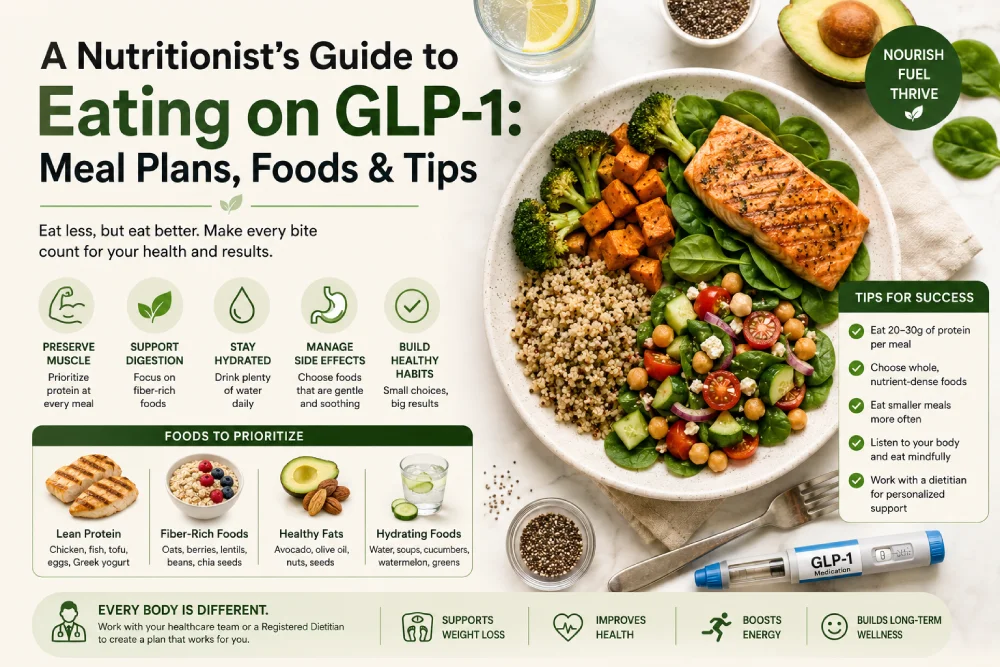
Starting a GLP 1 medication changes your appetite almost overnight. One day you eat normally, the next day you are full after a few bites. It is a shift. The medication works by reducing appetite, increasing fullness, and slowing digestion . But here is the thing. Eating less does not mean eating poorly. When your appetite drops, the quality of your food matters more than ever .
This guide covers what to eat, what to avoid, and how to manage GLP 1 side effects.
Why Your Plate Matters More on GLP 1
GLP 1 medications work by mimicking a natural hormone that regulates appetite. When you take them, food stays in your stomach longer. You feel full faster and stay full longer . This usually means eating significantly less than before. With fewer bites available, each meal needs to deliver protein, fiber rich foods, vitamins, and minerals . A poorly balanced plate can leave you undernourished even if weight loss medication continues.
Muscle loss is a real concern. Some of the weight lost on GLP 1 receptor agonist comes from muscle, not just fat. Up to 24%–30% of weight lost in trials may be fat-free mass . This matters because muscle supports strength, balance, and metabolism.
Foods to Prioritize
The best GLP-1 diet focuses on nutrient density rather than strict calorie counting. Here is what matters.
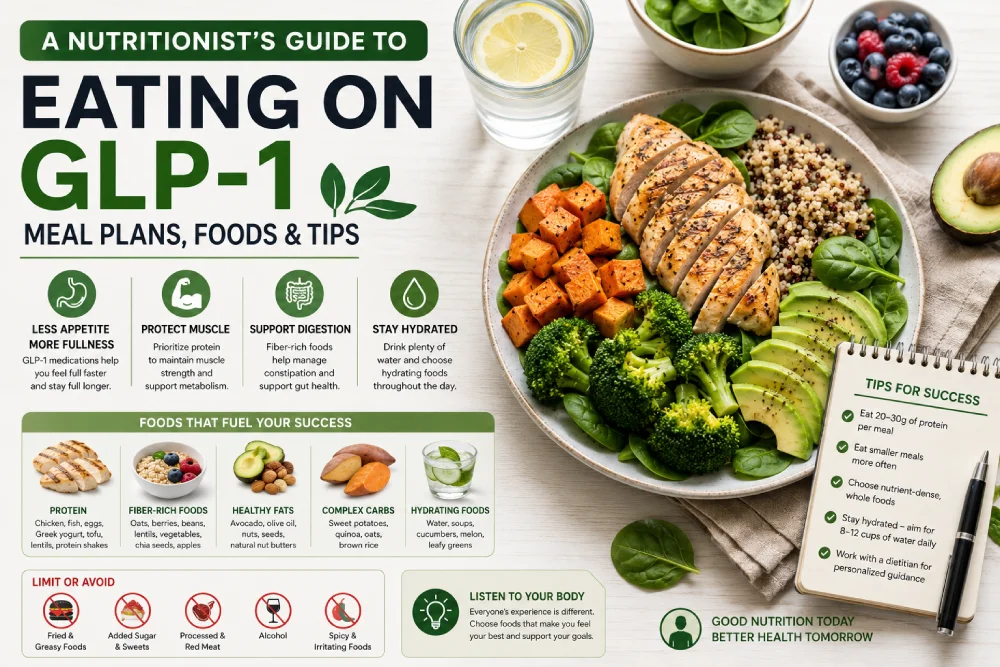
- Protein rich foods are your priority. Aim for 20 to 30 grams of protein per main meal . This helps preserve muscle and keeps you feeling full longer. Good sources include fish, chicken, turkey, eggs, Greek yogurt, tofu, and protein powders . If your appetite is very low, protein shakes with at least 20 grams per serving work well .
- Fiber keeps digestion moving. GLP 1 medications can cause constipation. Fiber helps. Aim for at least 25 grams per day . Good sources include oats, lentils, chickpeas, beans, chia seeds, berries, apples, sweet potatoes, and leafy greens .
- Complex carbohydrates provide steady energy. Choose slowly digested carbs like sweet potatoes, oatmeal, and quinoa instead of refined grains . They help prevent blood sugar swings and keep energy levels stable.
- Healthy fats add flavor and nutrients. Include olive oil, avocado, nuts, and seeds in small amounts. They support hormone balance and energy . But keep portions moderate, high-fat meals can trigger nausea .
- Hydrating foods and fluids are essential. GLP-1 medications can cause dehydration. Drink 8–12 cups of fluid daily, mainly water. Include water-rich foods like cucumbers, watermelon, and soups .
Foods to Limit or Avoid
Some foods can make side effects worse. Here is what to watch for.
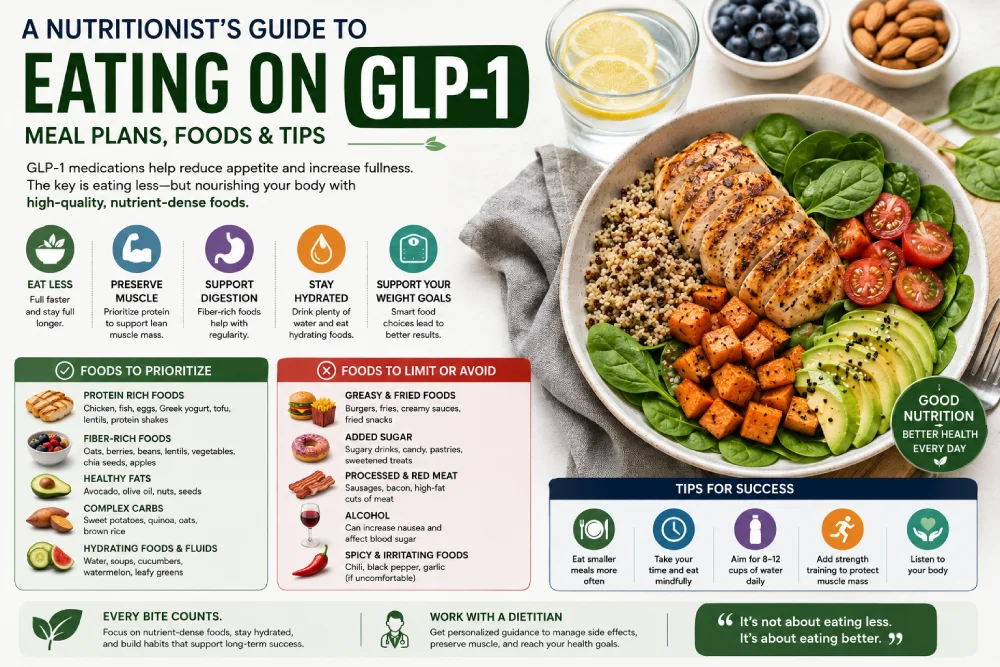
Greasy and fried foods slow digestion further and can worsen nausea and reflux . Limit burgers, fries, and creamy sauces. Excess added sugar like sugary drinks, candy, and pastries spike blood sugar and add empty calories. They provide little nutritional value .
Large portions of red or processed meat. These are harder to digest and higher in fat. Choose leaner options instead . Alcohol can increase nausea and interfere with blood sugar control .
Some people find black pepper, chili, and garlic irritating. Limit them if you notice discomfort .
Managing Common Side Effects Through Food
Digestive side effects like nausea, constipation, and bloating are most common when starting GLP 1s or increasing doses . Food choices can help.
- For nausea: Start with bland, low-fat meals like toast, rice, bananas, or broth . Avoid fried and greasy foods. Eat smaller meals more frequently. Try ginger tea . Avoid lying down for 2 to 3 hours after eating .
- For constipation: Gradually increase soluble fiber from oats and apples and insoluble fiber from vegetable skins and nuts . Drink plenty of water. Consider over-the-counter stool softeners if needed.
- For heartburn: Eat smaller portions. Avoid lying down after meals. Choose baking or steaming over deep frying .
Sample Meal Plan
Here is a sample day that prioritizes protein, fiber, and balanced nutrition.
- Breakfast: Greek yogurt with berries and chia seeds. This gives you protein from yogurt and fiber from berries and chia .
- Lunch: Grilled chicken or quinoa salad with roasted vegetables and olive oil dressing. Protein, fiber, and healthy habits .
- Dinner: Baked salmon or roasted chickpeas with sweet potato mash and broccoli. This meal provides protein, complex carbs, and vegetables .
- Snacks: Apple with almond butter, edamame, or a protein shake blended with spinach and berries .
What a Dietitian Can Do
Working with a Registered Dietitian can make a big difference on GLP 1 medications . They help manage side effects, prevent muscle loss, and build sustainable eating habits . A dietitian can create personalized plans that fit your lifestyle and preferences .
Conclusion
Eating on GLP-1 isn’t about cutting things out. It’s about making every bite count. Focus on protein. Drink enough water. Pick foods that actually feed your body. And most importantly, listen to how you feel
Frequently Asked Questions
How much protein should I eat on GLP-1?
Aim for 20 to 30 grams of protein per meal, with a daily target of 1.0 to 1.5 grams per kilogram of body weight. This helps preserve muscle mass .
What foods help with nausea on GLP-1?
Choose bland, low-fat foods like toast, rice, bananas, or broth. Eat smaller, more frequent meals. Avoid fried and greasy foods. Ginger tea can also help .
Can I eat carbs on GLP-1 medications?
Yes, but prioritize high-fiber carbs like lentils, beans, oats, and sweet potatoes. These support digestion, fullness, and blood sugar balance .
Do I need to take supplements on GLP-1?
Not necessarily. A well-balanced, nutrient-dense diet is usually better than supplements. But consult your doctor if you are at risk of deficiencies .
How do I avoid losing muscle on GLP-1?
Eat enough protein and incorporate resistance training into your routine. Aim for 2–3 strength sessions per week using bands, weights, or bodyweight exercises .
What should I do if nothing sounds good?
Don’t skip meals. Choose light, simple options with neutral flavors like a turkey sandwich or soup. If chewing is difficult, try a protein smoothie .
How do I stay hydrated on GLP 1?
Drink at least 8 cups of water daily. Include hydrating foods like soups, cucumbers, and melons. Minimize alcohol and caffeine .
Is it okay to drink alcohol on GLP 1?
It is best to minimize or avoid alcohol. It can worsen nausea and interfere with blood sugar control .
Do I need to work with a dietitian on GLP 1?
Not everyone needs one, but a dietitian can help you manage side effects, preserve muscle, and build sustainable habits . It is especially helpful if you have troublesome side effects or other health conditions .