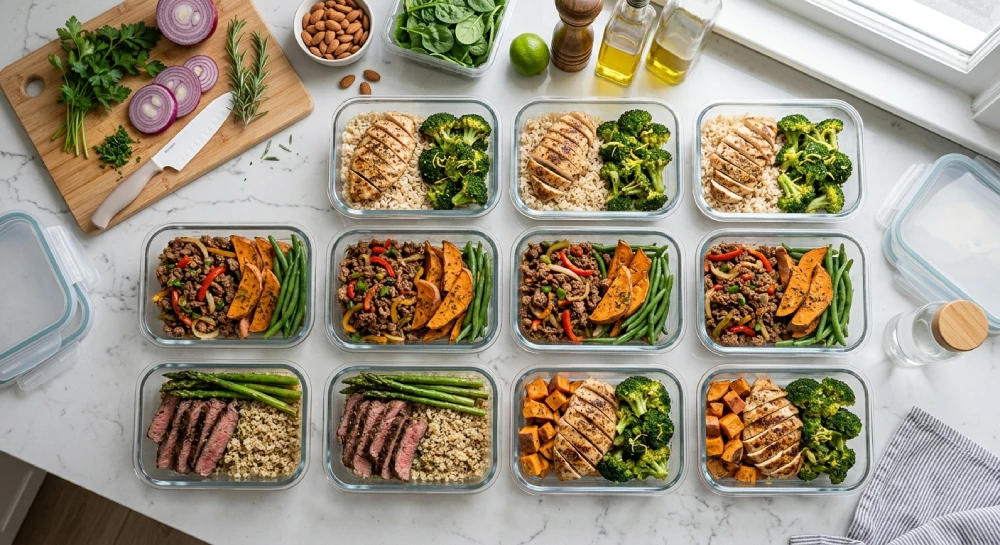
The main benefits of meal plans for muscle gain are that they reduce the daily hassle of deciding what to eat and help you stay consistent with your nutrition goals.
Preparing meals in advance saves time on busy days and makes it easier to stick to healthy, filling meals instead of reaching for fast food.
With a few simple ingredients and about 90 minutes of prep time, you can prepare several wholesome meals.
What Should Meal Plans for Muscle Gain Include?
Meal plans for muscle gain don’t need complicated recipes. Most can be built around protein, carbohydrates, fruits and vegetables, and healthy fats.
Some good options include chicken, eggs, fish, Greek yogurt, beans, tofu, rice, oats, potatoes, fruits, nuts, and olive oil.
Proteins consist of the amino acids necessary for the body to repair and replace muscle. Carbohydrates will provide fuel for training, and sufficient overall food will help you to achieve your goal.
Build Your 2-Hour Meal Prep Routine
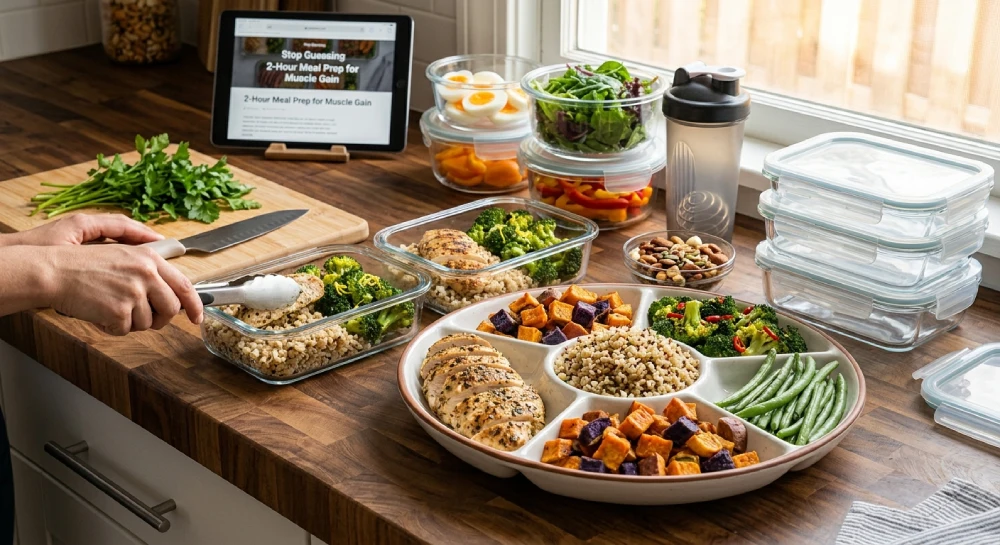
The easiest plans use batch cooking. Instead of making seven different meals, prepare a few foods that can be mixed and matched.
- Choose 2 proteins, 2 carbohydrates, and 2 vegetables.
- Start with rice, potatoes, or another grain first.
- Cook a protein such as chicken, lean beef, fish, or tofu.
- While the other foods cook, roast, steam, or chop your vegetables.
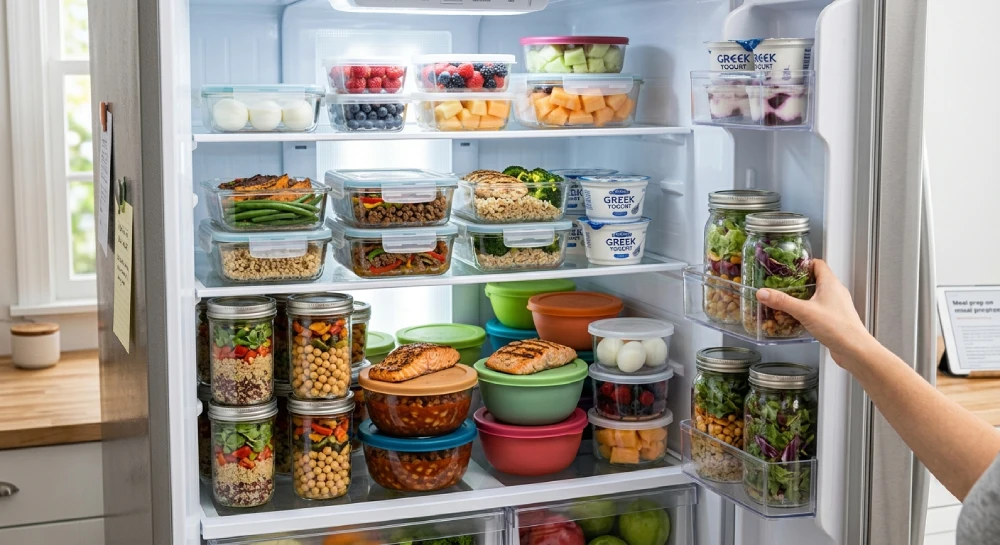
- Use containers and store in the fridge.
Try This Muscle Gain Diet Plan
Here’s a simple example of a muscle gain meal plan:
| Meal | Example |
| Breakfast | Eggs, oats, berries, yogurt |
| Lunch | Chicken, rice, vegetables |
| Snack | Greek yogurt, banana, nuts |
| Dinner | Lean beef or tofu, potatoes, vegetables |
| Optional | Protein shake and fruit |
Make a Clean Bulk Meal Plan Practical
A clean bulk meal plan should be repeatable. You can vary chicken, rice, vegetables, and spices to keep meals interesting. Variety in flavor keeps the same ingredients from getting stale.
It’s also useful to keep quick options available for busy days.
Yogurt, milk, fruit, eggs, whole-grain bread, or a protein shake can help when you don’t have time to prepare a full meal. Shakes are easy to prepare, but aren’t an actual meal.
Adapt Muscle Building Nutrition to Your Diet
Muscle building nutrition can be integrated into various diets. Foods that are available to eat include chicken, fish, eggs, lean meats, and dairy. Food choices include beans, lentils, tofu, tempeh, and soy foods.
Batch cooking is another option that can be used when following a vegan bodybuilder diet. Prepare lentil chili, tofu, rice, vegetables, and overnight oats in batches. The goal is to create meal plans for muscle gain that are easy to follow, provide enough protein and calories, and include foods you enjoy.
Avoid Common Meal Prep Mistakes
Some meal plans fail because they are too complicated. Buying too many ingredients or preparing too many different recipes can create unnecessary work.
But don’t simply concentrate on protein. Other foods like carbohydrates, fat, fruits, and vegetables are also part of a balanced approach. Your meals should support your resistance training without making your diet difficult to follow.
Conclusion
Meal plans for muscle gain should be simple, not complicated. Create food plans based on protein, carbs, veggies, healthy fats, and sufficient calories for the desired outcome. Then allow for a two-hour preparation time to cook for most of the week. Change the quantity of portions as necessary. Combine meals with scheduled resistance training and recovery activities. Select a plan that is feasible for you and can be repeated.
Frequently Asked Questions
How do meal plans for muscle gain help?
They plan meals ahead of time, helping you consume adequate food and protein. They eliminate last-minute decision-making.
How much protein do I need?
Protein requirements are dependent upon size and activity level. Add protein to all principal meals and snacks or shakes as needed throughout the day.
Do I need a calorie surplus?
A calorie surplus can help support weight and muscle gain. The amount needed depends on your body size, activity level, and goals.
Are protein shakes necessary?
No, eggs, milk/dairy, meat, fish, tofu, beans, and lentils are sources of protein. The main advantage of a shake is its convenience.
What foods are easiest to prepare?
Chicken, tofu, eggs, rice, potatoes, oats, beans, vegetables, and fruit can be easily prepared.
Can I repeat the same meals?
Yes. Repeating a few meals can make meal prep easier. You can change the seasonings, sauces, vegetables, or side dishes to add variety without creating extra work.
Can a vegan bodybuilder diet support muscle growth?
Yes. Maintain the structure while switching in seasonings, vegetables, or proteins.
Can meal prep really take two hours?
Yes, if you’re looking for a simple setup. Cooking proteins, carbs, and veggies in batches helps save time.
Are protein shakes for muscle gain useful after training?
They can help, especially if a real meal isn’t happening right after you train. But what actually matters is your protein total across the whole day — one shake right after a workout isn’t going to make or break anything.
What if I am not gaining muscle?
Food intake, protein, training and recovery should be checked first. Your plan can be consulted by a qualified dietitian or fitness professional.