
It’s not necessary to sacrifice muscle mass when you’re losing weight. A calorie deficit diet aims to eat less than the amount of calories your body requires, but you should still provide it with sufficient protein, nutrients and energy to keep your muscles nourished.
The tricky part is creating a deficit that is realistic. If you drastically reduce your food intake, you might end up feeling fatigued, hungry, and less likely to retain muscle. The better way is to find the proper calorie range, adequate protein, strength training, and foods that you can actually enjoy.
What Is a Calorie Deficit Diet?
A calorie deficit diet is just one in which you burn more calories than you consume. Your body will use up the extra energy stored during the period of time that you are not consuming them, and eventually you will lose weight.
But larger isn’t necessarily superior. A moderate deficit is usually easier to maintain and can help retain muscle mass.
The number of calories you require will vary based on your age, gender, size, and activity level, as well as your weight loss objectives. A calorie deficit calculator for weight loss can give you an idea, but it’s not a precise formula to follow.

How Many Calories Do You Need to Lose Weight?
If you are wondering, how many calories do I need to lose weight, there is no single number that works for everyone.
A person with this type of activity and body size may require a lot more or a lot less. This is to achieve a manageable deficit from the individual maintenance requirements.
Very low calorie plans are not guaranteed to have a better effect. For instance, a 1300 calorie diet plan or a 1500 calorie diet plan might work for some individuals, but not for others.
Do not select a number for the sake of it, but rather take into consideration the energy demands and how well you can adhere to the plan.
How Should You Build a Calorie Deficit Meal Plan?
A good calorie deficit meal plan should consist of the appropriate amounts of protein, fiber, healthy fats and carbs to ensure that meals are filling. Make the majority of your meals based on:
- Carbohydrates: crackers, pretzels, noodles, rice, popcorn, bread, or crackers with hummus and veggie.
- Fruits: everything but fruit juices.Protein: soy, beans, nuts and seeds.
- Protein: meat, fish, eggs, nuts, nut butters, and legumes.
When an individual is trying to maintain muscle during weight loss, protein is one of the most important factors. Adding a protein source to each meal can help you get the protein you need.
What Could a Daily Food Plan for Weight Loss Look Like?
A daily food plan to lose weight doesn’t have to be complicated or very restrictive.
For instance, eggs with whole grain toast and fruit for breakfast. They might have grilled chicken, rice and vegetables for lunch. A snack of Greek yogurt and berries can suffice, and dinner can feature fish or lean meat, potatoes and a generous portion of vegetables.
These foods and amounts will be tailored to your calorie and nutrition needs. No need to eliminate carbs or any foods you love.
Does a Diet Plan Differ for Men and Women?
A diet plan for weight loss for male and a diet plan for weight loss for females can have the same underlying concepts, but may have different calorie and nutrient requirements.
There are differences between men and women in calorie needs due to body size and muscle mass, and within women there are also significant differences.
Your calorie goal should be based on your body type, activity level and goals, not based on a generic plan for either men or women.
The same applies to protein portions and intake and meal sizes.
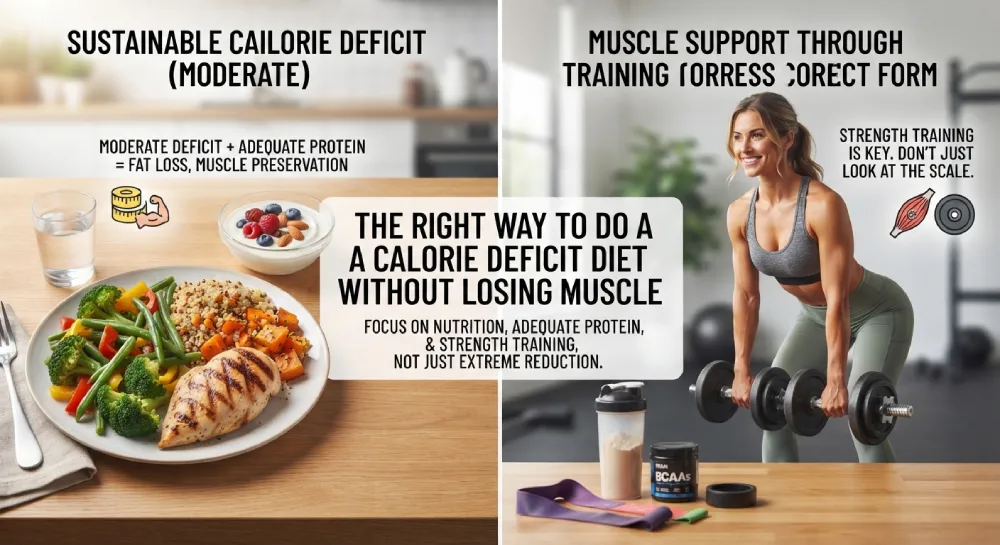
How Can You Lose Weight Without Losing Muscle?
The greatest error is only looking at the scale. If it is important to preserve your muscle mass, you should also support your training and recovery while in a calorie deficit diet.
Strength training makes your muscles want to remain. Now, enough protein to build your body and a moderate amount of calories that are in a deficit to help you lose fat in a more sustainable manner.
Don’t make the portion of each meal as small as you can either. A good strategy is to fill the empty calories with protein-rich and high fiber foods in order to feel full without surpassing the calorie budget.
What Are the Best Calories for Weight Loss?
The number of calories for lose weight varies. Your goal should be based on your maintenance calories, not someone else’s.
If you’re not reaching weight loss goals after a few weeks, it’s time to take a look at your food, activity, portions and consistency. A good guideline is not to pay too much attention to one day’s weight, but rather to consider trends over time.
The ideal plan is one that’ll make you progress without being continuously exhausted and hungry.
Conclusion
It is not necessary to eat as little as possible to achieve a successful calorie deficit diet. It involves making a sensible calorie deficit and supplying proper amounts of protein, healthy food, and exercise assistance to preserve muscle mass.
Take the calorie estimates as a guide, make your main meal protein and high fibre foods, and opt for foods that you can sustain eating.
Frequently Asked Questions
What is the best calorie deficit diet for weight loss?
It’s usually easier to keep up with a moderate deficit. The right amount will vary by your personal maintenance calories, activity level, health and weight loss objectives.
Can a calorie deficit cause muscle loss?
It can, especially if the deficit is too intense or if there isn’t enough protein in the diet, or strength training. Consuming sufficient protein and maintaining resistance training will help maintain muscle.
Is a 1500 calorie diet plan good for weight loss?
Following a 1500 calorie diet plan may lead to a deficit in some and not in others. The number of calories you require will vary based on your body size, activity level, age, and personal goals.
Is a 1300 calorie deficit diet plan too low?
A 1300 calorie diet plan may be too restrictive for some people. A low calorie diet should not be selected because it promises to be effective in a shorter period of time as all calorie requirements differ from person to person.
How does a calorie deficit calculator for weight loss work?
A calorie deficit for weight loss program is used to find out how many calories you require to maintain your weight based on your sex, activity level, height and weight, and then provides a lower calorie goal.
What foods are best during a calorie deficit?
Protein rich foods, vegetables, fruits, whole grains, legumes and foods rich in fibre can help to limit calorie consumption and make food more filling.
How many calories do I need to lose weight?
So, if you are wondering how many calories do I need to lose weight, the answer is that it depends on how many calories you need to maintain your body. It is better to give an estimate of calories that fits the individual, rather than a fixed number.
Should men and women follow different weight-loss diets?
A diet plan for weight loss for male may have different calorie requirements than a diet plan for weight loss for females, but both can follow the same basic principles of balanced nutrition and an appropriate calorie deficit.
Do I need to stop eating carbohydrates to lose weight?
No. Carbohydrates can be part of a balanced calorie deficit meal plan. Choosing portions that fit your calorie needs and pairing carbohydrates with protein and fiber can make meals more satisfying.
What is the easiest way to maintain a calorie deficit diet?
Build meals around protein, vegetables, high fiber foods, and appropriate portions, while keeping foods you enjoy in your routine. A sustainable plan is usually easier to maintain than extreme restriction.