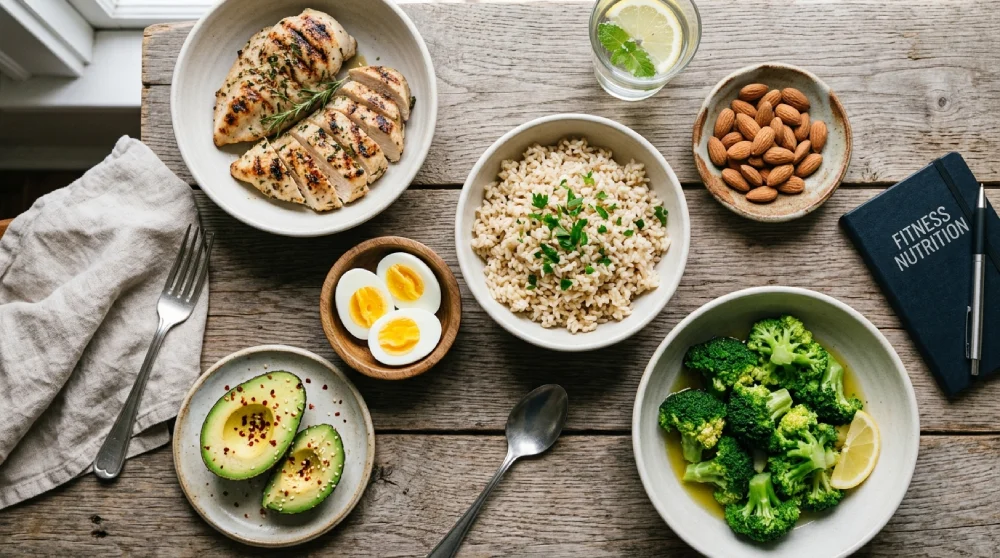
You can’t just go to the gym for hours and hours and get muscular. A proper nutrition plan for muscle gain ensures that you have sufficient energy and nutrients necessary for training, recovery, and muscle building. Exercise is the impetus for building growth, food is the fuel to help recovery.
Complicated plans are not necessarily a good plan.
What Should a Nutrition Plan for Muscle Gain Include?
If you are training, nutrients and energy in a balanced diet should be sufficient for your nutritional needs. Protein is crucial for repairing muscles and carbs for providing energy during exercise, and fats are essential for keeping the body healthy.
The following are examples of a practical plan:
- Eat lean meat, fish, eggs and dairy products.
- Beans, other protein foods
- Rice, oats, potatoes and whole grains
- Fruits and vegetables
- Nuts, seeds and healthy oils
- Nutrient rich milk or other liquid(s)
How Much Protein Do You Need to Build Muscle?
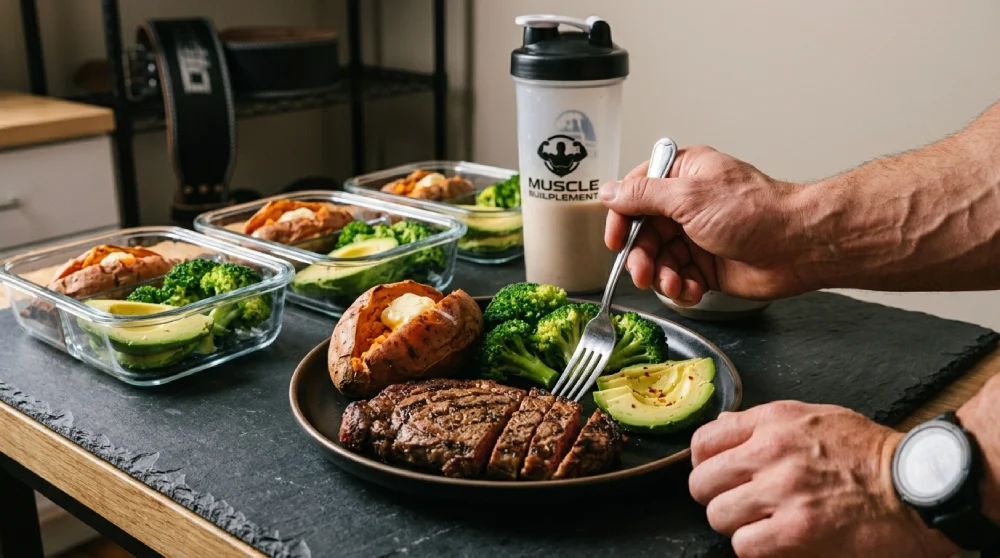
Protein is one of the most crucial components of a muscle building eating regimen. Protein-rich foods like chicken, eggs, Greek yogurt, fish and cottage cheese are great sources for protein all day long.
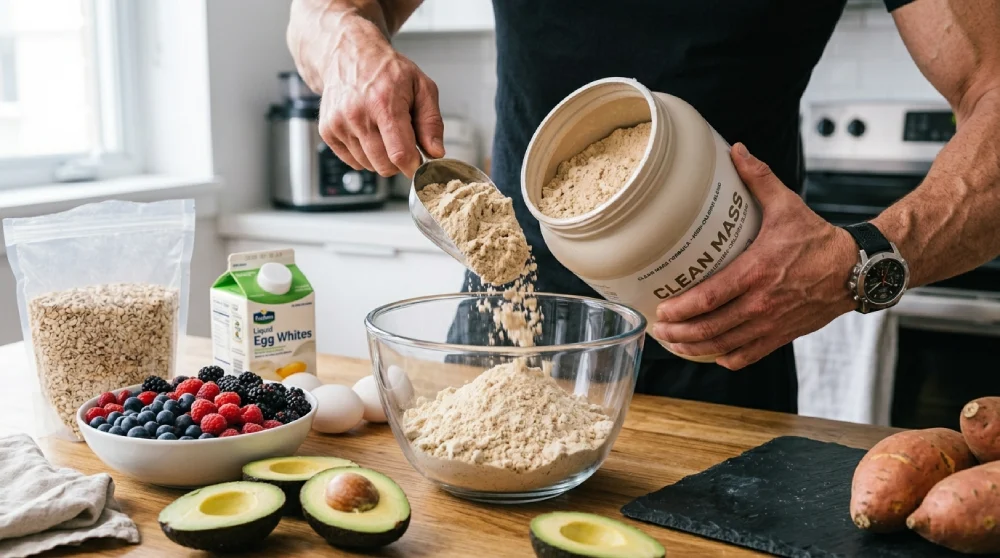
Another convenient use of whey protein is when meeting the protein requirements from regular food is challenging. It should be used in addition to a balanced diet and does not replace a balanced diet.
Another alternative is casein protein, which digests slower than whey and can be a good protein source for those looking to snack or have a protein drink before going to sleep.
What Should You Eat Before a Workout?
The pre workout meal should fuel you without giving you any stomach discomfort. The best option will vary based on when the meal will be consumed prior to training and according to tolerance.
This can be achieved through:
- Fruit and yogurt oatmeal
- Rice with chicken
- Whole grain toast topped with eggs.
- Banana with yogurt
- A smoothie of fruit and protein
When eating before a workout, opt for a familiar meal that is low in fiber and easy to digest, and avoid trying a new (big or heavy) meal just before exercise.
What Should You Eat After a Workout?
A post workout meal should restore energy, and promote muscle recovery. Don’t need to rush to eat right after exercise, but a balanced meal within a reasonable time after exercise can help to achieve daily nutrition goals.
Examples include:
- Chicken, rice, and vegetables
- Eggs with potatoes and fruit
- Greek yogurt with oats and berries
- Salmon with rice and vegetables
- A protein shake with fruit when a full meal is not convenient
Eating after workout is an effective component of the daily eating routine, not a meal in and of itself.
How to Build a Simple Muscle-Gain Meal Plan
A practical nutrition plan for muscle gain can be built around three main meals and one or two snacks, depending on calorie needs and appetite.
For example:
| Meal | Example |
| Breakfast | Eggs, oatmeal, fruit |
| Lunch | Chicken, rice, vegetables |
| Pre-workout | Banana and yogurt |
| Post-workout | Whey protein and fruit |
| Dinner | Fish, potatoes, vegetables |
| Evening snack | Greek yogurt or casein protein |
Common Muscle-Gain Nutrition Mistakes
All the best exercise plans can come to an end because of poor eating habits. Common mistakes include:
- Not getting enough overall calorie intake
- Eating insufficient amounts of protein.
- Largely depending on supplements
- Failing to eat regularly during training
- Expecting rapid results
- After a too strict diet
Conclusion
A good nutrition plan for muscle building doesn’t have to be complicated or one that requires the use of an expensive supplement. Focus on calories, protein, whole grain carbohydrates, good fat and regular eating times.
Frequently Asked Questions
What is the best nutrition plan for muscle gain?
The ideal nutrition plan for muscle gain includes adequate calories, protein, carbs and fats for muscle growth and recovery. Foods should be well balanced and customized to target and individual’s goals.
How much protein should I eat to build muscle?
The requirement for protein depends on how active one is, their size and training objectives. A protein supplement might be useful when a well-balanced diet with regular meals (rich in protein) is not sufficient to meet your needs.
Is whey protein necessary for muscle gain?
No. Whey protein doesn’t need to be used, it’s convenient. Eggs, foods containing dairy, fish, poultry, meat, beans and other protein-rich foods can help satisfy most protein requirements.
Is casein protein good for building muscle?
Casein protein is a source of protein that is digested slowly. When it’s convenient, it could be beneficial, but it’s more important to take in all the protein you need for the day and over the course of the day.
What should I eat as a pre workout meal?
A pre workout meal can combine carbohydrates with a moderate amount of protein. Depending on the time of day, it can be oats with fruit and yoghurt or rice with chicken.If time permits, it can be oats with fruit and yoghurt, rice with chicken, or toast with eggs.
Is eating before a workout important?
Eating before a workout can serve as a source of energy and can aid training performance when working out after several hours of no food intake. The best meal will depend on your workout schedule and how well it fits your stomach.
What should I eat after a workout?
Protein and carbohydrates are a must in a post workout meal. Choices include chicken and rice, eggs and potatoes or yogurt and oats and fruit, which can help to replenish the necessary nutrients.
Is eating after a workout necessary?
It’s important to eat after a workout if needed to get the required amount of calories and protein for the day, but a meal doesn’t need to be eaten straight after exercise. The other aspect of nutrition on a daily basis is more important.
Are complex carbs good for muscle gain?
Yes. Whole grains, beans, potatoes, oats and other complex carbohydrates can be used to fuel training sessions and are a great source of fibre and other nutrients for a well-balanced diet.
Can supplements replace a muscle-building diet?
The use of supplements is to be used in addition to a healthy diet. Whey protein or casein protein may help you more easily achieve protein goals, while whole foods offer a greater variety of nutrients.