
Training hard while eating without a defined strategy is a typical issue that may be resolved with a muscle-building gym meal plan. Exercise may not yield the desired results if meals are deficient in protein, energy, carbs, and good fats. Your body requires energy for exercise, and muscle development, so nutrition is important.
This guide shows you how to plan balanced meals, calculate calories, and stick to a realistic seven-day schedule. In addition, you will learn how to change the portions to either keep a certain weight, workout food plan, gain muscle, or reduce fat, so that your meals meet precisely your objective.
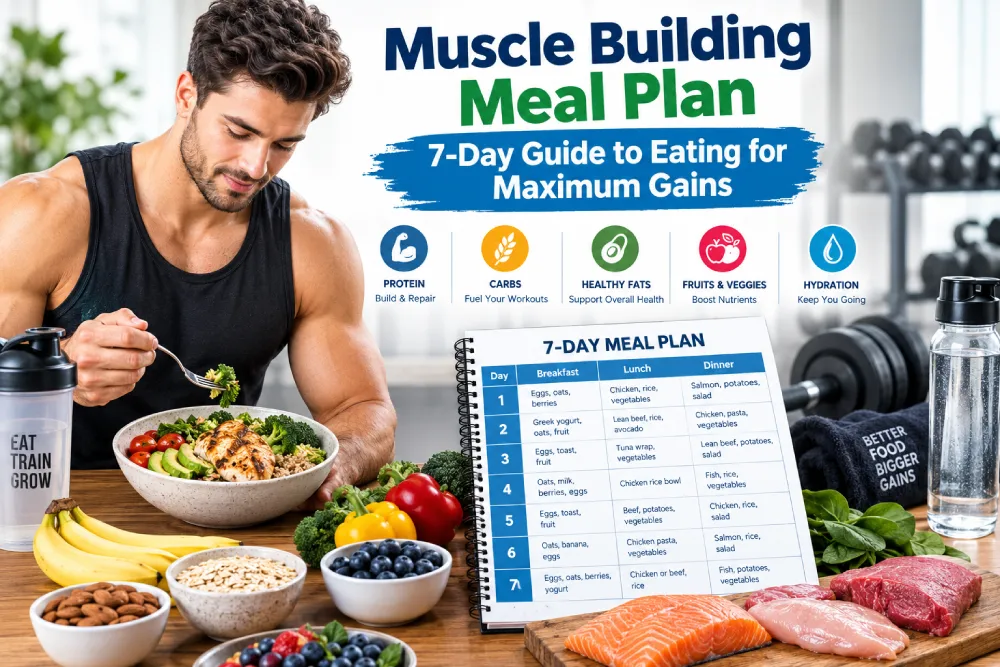
What Makes a Good Muscle Building Meal Plan?
Protein-rich products, complex carbohydrates, lipids, fruits, vegetables, as well as liquids are the basic food groups. In general, carbohydrates are the body’s fuel during exercise, lipids are essential for a healthy diet, and proteins repair the body after exercise.
Therefore, a person’s weight, how intensely they work out, how often they work out, and what their goal is determines which dietary group is prioritized. A person on a diet plan for both fat loss and muscle gain may require a different intake than someone looking to gain muscle.
How to Calculate Calories for Muscle Gain
Estimate your weight maintenance calories, or the amount of energy required to keep your present weight. Exercise, activity, and body size can all be taken into account when calculating calories.
You might require more than upkeep if you want to grow muscle. Change portions progressively after keeping an eye on your weight, strength, appetite, and recuperation.
7-Day Muscle Building Meal Plan
This muscle building meal plan is a flexible framework. Adjust serving sizes according to your calorie needs and protein requirements.
| Day | Breakfast | Lunch | Dinner |
| 1 | Eggs, oats, berries | Chicken, rice, vegetables | Salmon, potatoes, salad |
| 2 | Greek yogurt, oats, fruit | Lean beef, rice, avocado | Chicken, pasta, vegetables |
| 3 | Eggs, toast, fruit | Tuna wrap, vegetables | Lean beef, potatoes, salad |
| 4 | Oats, milk, berries, eggs | Chicken rice bowl | Fish, rice, vegetables |
| 5 | Eggs, toast, fruit | Beef, potatoes, vegetables | Chicken, rice, salad |
| 6 | Oats, banana, eggs | Chicken pasta, vegetables | Salmon, rice, salad |
| 7 | Eggs, oats, berries, yogurt | Chicken or beef, rice | Fish, potatoes, vegetables |
How to Build Your Own Gym Menu Plan
Protein, carbs, produce, and healthy fat should be the four pillars of every meal. This approach will make one’s meal preparation easier when on a gym food diet by eliminating the need to prepare different meals.
Make sensible substitutions: rice for potatoes, Greek yoghurt for cottage cheese, and chicken for fish or lean beef. Long-term maintenance of a flexible diet plan for muscle gain and fat loss
is simpler.

Common Muscle-Building Meal Planning Mistakes
Avoiding extreme low-calorie diets, overemphasizing protein, constantly changing the diet, or attempting to eat as others do should be avoided. In addition, a supplement should not replace healthy eating. Monitoring the portion sizes and the number of calories ingested, if results are not appearing in the form of increased performance, recovery, or weight changes, should also be done.
Conclusion
A good meal plan for muscle growth that provides the basis of nutrition for the workout. The emphasis is shifted from exotic recipes to sufficient protein, calories, carbohydrates, healthy fats, and wholesome foods.
The maintenance amount is estimated, the meals are chosen from the seven-day program, which allows tracking of progress and improvements, and the changes are made if necessary. Consistent eating will create conditions for the growth and recovery of muscles and keep you on a simple diet.
Frequently Asked Questions
What is a muscle building meal plan?
A muscle building meal plan is a simple eating plan that gives your body enough protein, calories, carbs, and healthy fats to support muscle growth and recovery.
What foods are best for building muscle?
Good choices include eggs, chicken, fish, lean beef, Greek yogurt, milk, rice, oats, potatoes, beans, fruits, and vegetables. Try to include protein in every main meal.
How much protein do I need to build muscle?
The amount of protein you need depends on you and your activity level. A good source of protein with every meal will help you consume enough protein to build lean muscles.
How many meals should I eat for muscle growth?
There is no fixed number of meals you must eat. Three main meals with one or two healthy snacks can work well if they help you meet your daily protein and calorie needs.
What should I eat before a workout?
Choose something that gives you energy without feeling too heavy. A banana with yogurt, oats with milk, or toast with eggs can be simple pre-workout choices.
What should I eat after a workout?
After training, have a meal with protein and carbohydrates to support recovery. Chicken with rice and vegetables, eggs with toast, or yogurt with fruit are easy options.
Can a muscle building meal plan help me gain weight?
Yes. Eating enough calories along with regular strength training can help support healthy weight and muscle gain. Increase your portions gradually if you are not seeing progress.
Can I build muscle without taking supplements?
Yes. You can build muscle by getting your protein and nutrients from everyday foods. Supplements can be convenient, but they are not required for a good muscle building meal plan.
Can I build muscle and lose fat at the same time?
It can be possible, especially for beginners or people returning to strength training. Focus on enough protein, regular resistance training, and an appropriate calorie intake.
How can I make my muscle building meal plan easier to follow?
The best way to simplify muscle building meal prep is to have clean eating with easily digested food. Apart from consuming the above-mentioned food, one could also consider freezing some meals, as it could be hectic to thaw and cook during busy schedules.