Living with IBS is honestly exhausting. One minute everything feels fine, next minute bloating hits, then sensitive stomach cramps appear out of nowhere.
And that’s exactly why a low-FODMAP diet becomes useful. Not as a strict forever diet, but more like a simple way to stop guessing which foods are causing trouble every single day. It just makes eating feel clearer. Less fear. Less stress and best foods for IBS.
What low-FODMAP diet actually means
A low-FODMAP diet process is just this idea: Eat fewer fermentable carbohydrates… and eat more foods that settle the gut. That is literally it. So instead of bread, onions, garlic, apples, and wheat all the time, the plate starts shifting to:
– carrots and cucumbers that feel gentle
– chicken, fish, eggs, simple proteins
– rice and quinoa that digest easily
– vegetables that don’t trigger bloating
And slowly, the gut just starts calming down instead of reacting. Nothing fancy. Just a switch in food choices.
Why low-FODMAP diet works in real life
The main reason it works is simple. IBS diet is unpredictable. People don’t have time to think:
“What food will trigger me today?” “Will this meal cause bloating later?” So low-FODMAP diet planning helps because it makes decisions easier.
It kind of becomes like:
– Morning → eat something light and gentle
– Lunch → proper protein with safe vegetables
– Dinner → keep it simple and easy to digest
– Snacks → only if actually needed
So instead of worrying about food all day, it just flows.
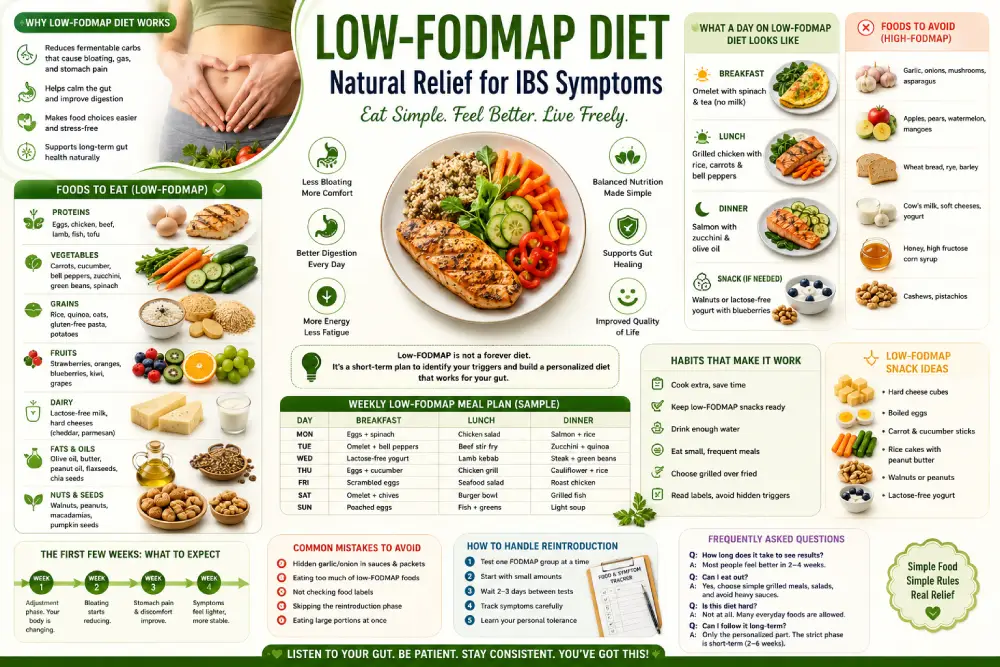
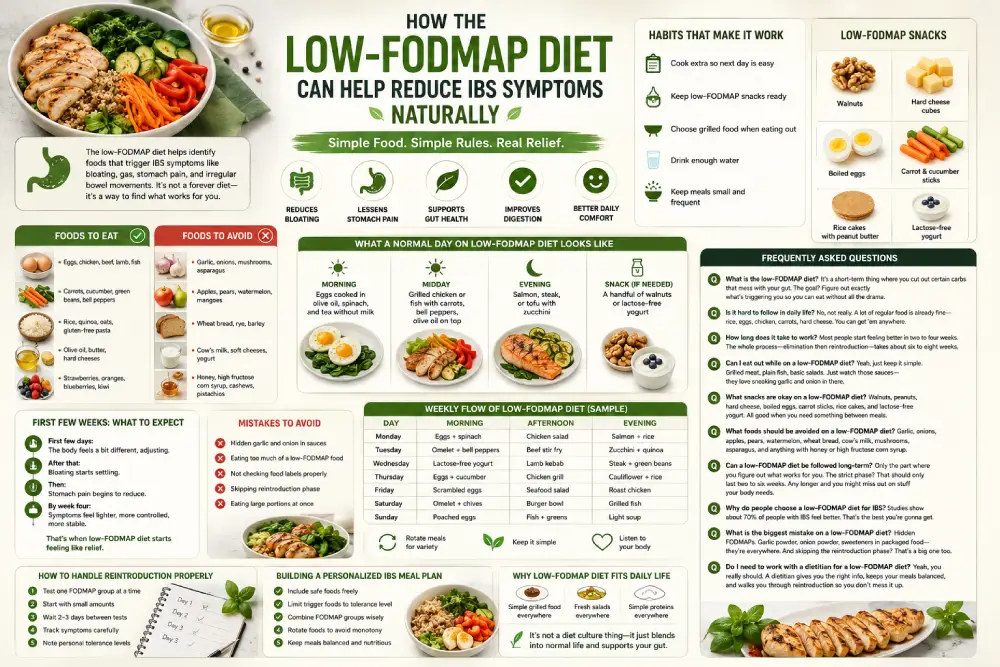
What a normal day on low-FODMAP diet looks like
Let us make it real.
Morning:
Eggs cooked in olive oil, maybe spinach, and tea without milk.
Midday:
Grilled chicken or fish with carrots, bell peppers, olive oil on top.
Evening:
Something light like salmon, steak, or tofu with zucchini.
And if hunger hits:
A handful of walnuts or maybe lactose-free yogurt.
That is it. Nothing complicated. Just normal food done smartly.
Foods that actually make low-FODMAP diet easy
Now this part is important because this is what keeps everything working. Stick to:
- eggs, chicken, beef, lamb, fish
- carrots, cucumber, green beans, bell peppers
- rice, quinoa, oats, gluten-free pasta
- olive oil, butter, hard cheeses
- strawberries, oranges, blueberries, kiwi
These foods just keep symptoms quiet. That is the real point.
Foods that quietly mess things up
And then there are the ones that look normal but trigger everything.
- garlic, onions, mushrooms, asparagus
- apples, pears, watermelon, mangoes
- wheat bread, rye, barley
- cow’s milk, soft cheeses, yogurt
- honey, high fructose corn syrup
- cashews, pistachios
Even small amounts of these high FODMAP foods can knock the gut off balance.
Weekly flow of low-FODMAP diet
Instead of stressing daily, just rotate meals like this:
| Day | Morning | Afternoon | Evening |
| Monday | Eggs + spinach | Chicken salad | Salmon + rice |
| Tuesday | Omelet + bell peppers | Beef stir fry | Zucchini + quinoa |
| Wednesday | Lactose-free yogurt | Lamb kebab | Steak + green beans |
| Thursday | Eggs + cucumber | Chicken grill | Cauliflower + rice |
| Friday | Scrambled eggs | Seafood salad | Roast chicken |
| Saturday | Omelet + chives | Burger bowl | Grilled fish |
| Sunday | Poached eggs | Fish + greens | Light soup |
Simple rotation. No pressure.
The habits that actually make it work
Honestly speaking, it is not just food. It is a habit.
- cook extra so next day is easy
- keep low-FODMAP snacks ready
- choose grilled food when eating out
- drink enough water
- keep meals small and frequent
These small things quietly decide everything.
Low-FODMAP snacks in real life
Because let us be real… hunger hits. So instead of grabbing random food, focus on:
- walnuts, peanuts, macadamia nuts
- hard cheese cubes like cheddar
- boiled eggs
- carrot and cucumber sticks
- rice cakes with peanut butter
First few weeks of low-FODMAP (what it actually feels like)
So in the elimination phase, this is usually what happens:
First few days:
The body feels a bit different, adjusting.
After that:
Bloating starts settling.
Then:
Stomach pain begins to reduce.
By week four:
Symptoms feel lighter, more controlled, more stable.
That is when low-FODMAP diet stops feeling like a plan and starts feeling like relief.
Mistakes people make without noticing
Even when trying hard, small mistakes happen:
- hidden garlic and onion in sauces
- eating too much of a low-FODMAP food
- not checking food labels properly
- skipping reintroduction phase
- eating large portions at once
Nothing big… but they slow progress a lot.
Why low-FODMAP fits daily life naturally
This actually makes things easier than people think.
- Simple grilled food everywhere.
- Fresh salads everywhere.
- Simple proteins everywhere.
So a diet does not feel like a diet culture thing. It just blends into normal life.
Why low-FODMAP diet feels easier than other diets in real life
A low-FODMAP diet feels different because it removes that constant guessing game. It just gives a simple direction: avoid fermentable carbs, eat gentle foods, and stop overthinking every bite.
Another reason it feels easier is because this lifestyle already supports this approach. Grilled food is everywhere, fresh vegetables are easy to find, and eating out does not automatically mean breaking the plan. So it naturally fits into normal routines without forcing big changes.
How to handle reintroduction properly
This phase is actually the most important part of the whole low-FODMAP diet.
- test one FODMAP group at a time
- start with small amounts
- wait 2 to 3 days between tests
- track symptoms carefully
- note personal tolerance levels
This is what turns a temporary elimination plan into a lifelong personalized eating style.
Building a personalized IBS meal plan
After reintroduction, the real IBS meal plan takes shape.
- include safe foods freely
- limit trigger foods only to tolerance level
- combine FODMAP groups wisely
- rotate foods to avoid monotony
- keep meals balanced and nutritious
This is when the low diet stops being restrictive and starts being liberating.
Conclusion
At the end of the day, a low-FODMAP diet is not about being strict or perfect. It is just about keeping food simple, removing the guesswork, and eating in a way that actually supports gut health instead of triggering symptoms.
Simple food. Simple rules. Real relief.
Frequently Asked Questions
What is the low-FODMAP diet?
It’s a short-term thing where you cut out certain carbs that mess with your gut. The goal? Figure out exactly what’s triggering you so you can eat without all the drama.
Is diet hard to follow in daily life?*
No, not really. Lot of regular food is already fine — rice, eggs, chicken, carrots, hard cheese. You can get ’em anywhere.
How long does low diet take to work?
Most people start feeling better in two to four weeks. The whole deal — cutting stuff out then adding it back — takes about six to eight weeks.
Can I eat out while on a low diet?
Yeah, just keep it simple. Grilled meat, plain fish, basic salads. Just watch those sauces — they love sneaking garlic and onion in there.
What snacks are okay on low diet?
Walnuts, peanuts, hard cheese, boiled eggs, carrot sticks, rice cakes, and lactose-free yogurt. All good when you need something between meals.
What foods should be avoided on a low- diet?
Garlic, onions, apples, pears, watermelon, wheat bread, cow’s milk, mushrooms, asparagus, and anything with honey or high fructose corn syrup. That’s the big one.
Can a FODMAP diet be followed long-term?
Only the part where you figure out what works for you. The strict phase? That should only last two to six weeks. Any longer and you might miss out on stuff your body needs.
Why do people choose a diet for IBS?
Studies show about 70% of people with IBS feel better. That’s the best you’re gonna get.
What is the biggest mistake on a low diet?
Hidden FODMAPs. Garlic powder, onion powder, sweeteners in packaged food — they’re everywhere. And skipping the reintroduction phase? That’s a big one too.
Do I need to work with a dietitian for a low diet?
Yeah, you really should. A dietitian gives you the right info, keeps your meals balanced, and walks you through reintroduction so you don’t mess it up.