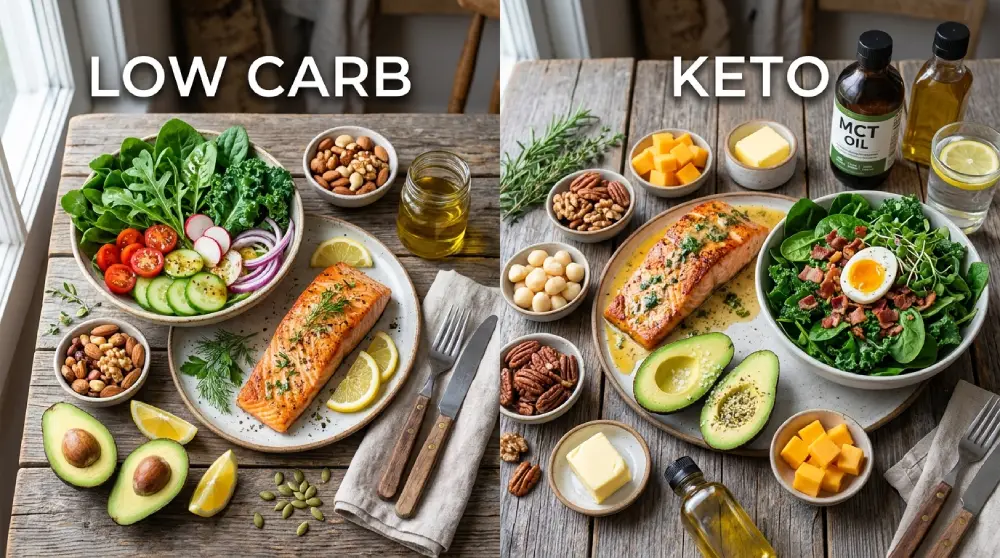
Reducing carbohydrates is a popular way to change eating habits, but not every low-carb approach works the same way. Some people simply cut back on bread, rice, and sugary snacks, while others follow a much stricter plan designed to change how the body uses energy.
Understanding low carb vs keto can help you choose an eating pattern that fits your preferences, health needs, and daily routine. Both approaches limit carbohydrates, but they differ in how much you eat, what you prioritize, and how difficult they can be to maintain.
What Is the Difference Between Low Carb and Keto?
The main difference between low carb and keto is the level of carbohydrate restriction. Low-carb diets reduce carbohydrate intake without necessarily aiming to put the body into ketosis. A ketogenic diet restricts carbohydrates much more strictly to encourage the body to use fat-derived ketones for energy.
Both approaches can include protein, vegetables, eggs, fish, meat, nuts, and healthy fats. The main difference is the balance and quantity of these foods.
7 Key Differences Between Low Carb and Keto
1. Daily Carbohydrate Intake
The first difference in low carb vs keto is how much carbohydrate you can eat.
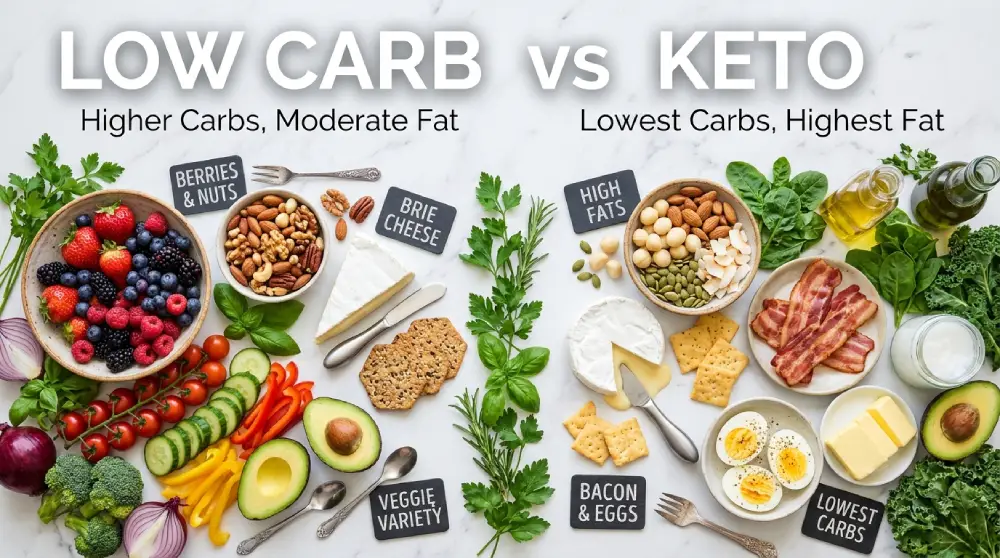
Low-carb diets often allow more flexibility with foods such as fruit, beans, whole grains, and starchy vegetables, depending on the plan. Keto diets generally limit these foods more heavily to keep carbohydrate intake low.
This distinction matters when planning everyday meals. Someone following a less restrictive low-carb diet may find it easier to include a small serving of oats or lentils, while a person following keto may need to account for every source of carbohydrates.
2. How the Body Uses Energy
Both diets alter the nutrient composition that you’re taking in, however, the objective for the keto diet is quite specific.
The typical low carb diet allows a combination of carbohydrates and fats to be used as fuel. Keto involves restricting carbs and the liver responds by making ketones from fat. In this state, it’s known as nutritional ketosis.
Insufficient insulin levels cause a dangerous condition called diabetic ketoacidosis (DKA) which is not the same as nutritional ketosis. A person with diabetes should be advised by his doctor before starting a ketogenic diet; particularly if he is taking certain types of medication.
3. Food Choices and Variety
There is a lot of flexibility when it comes to low carb diets. Depending on the plan, the whole grain, legumes, fruit and starchy vegetables are provided in small amounts in addition to the protein and non-starchy vegetables.
Keto is more restrictive. Common items of the keto diet foods include eggs, fish and seafood, poultry, meat, olive oil, avocado, nuts, seeds, cheese and low-carb vegetables like spinach, zucchini, and broccoli.
There is a significant possibility of reducing the amount of fruit, bread, rice, pasta, beans and potatoes on keto. This may make eating at restaurants or out of the house with other family members who eat differently difficult.
4. Weight Loss and Expectations
A low carb diet for weight loss may help some people reduce calorie intake by emphasizing protein-rich foods, vegetables, and satisfying meals. Keto also boasts some weight loss benefits, especially over short-term.
But both diets don’t necessarily produce a better outcome for each person. In the initial period of weight loss on keto, some weight may be due to water loss from consuming stored carbohydrates. The long term outcomes are based on consistency, overall food consumption, activity, sleep and health.
If you’re wondering about low carb vs keto, consider if either eating plan allows you to achieve a well-balanced diet and healthy habits that you can sustain, and not if either will produce quick results.
5. Potential Health Benefits
The low carb diet benefits may include better blood sugar control for some people, especially when reducing sugary drinks and highly refined carbohydrates. Moreover, a well-designed low carb meal plan can also promote weight management and enhance some metabolic health indicators.
Some people have short-term weight loss and better blood sugar control as a result of the potential ketogenic diet benefits. Very-low carb/ketogenic diets also are prescribed medically for the treatment of some seizure disorders.
Both methods aren’t necessarily healthy. Food quality is important: vegetables, fiber foods as allowed, good fats and healthy protein foods are important.
6. Side Effects and Practical Challenges
One of the biggest differences in low carb vs keto is how restrictive the diet feels. It may be easier to follow a moderate low carb diet, or you may need to be more mindful of the amount of carbohydrates you consume in a keto diet.
Some potential keto diet side effects are headaches, fatigue, constipation, muscle cramps, and digestive issues, especially at the beginning. Increased LDL cholesterol is also a possible symptom that some may have. Limiting a wide variety of fruits, grains and legumes may decrease your intake of fiber and other nutrients if meals are not planned properly.
The keto diet pros and cons should be considered before starting. A plan that leaves you feeling drained of energy, doesn’t allow for socialising at some of your favourite restaurants or is hard to stick to is not necessarily the best one to take along for the ride.
7. Planning and Long-Term Sustainability
Low carbs can be customized to your lifestyle and may be enjoyed. You can still enjoy some of your favorite foods, but will need to limit refined carbohydrates and portion sizes.
In order to maintain a low carb diet, maintain adequate protein, healthy fat, vitamin and mineral intake, a keto diet plan will need to be outlined in more detail. It might need to be learned to read food labels and count the carbs, particularly at the start.
The ideal is one that will satisfy your nutritional requirements as well as your lifestyle. It’s not like you need to go on the strictest diet to make the diet changes.
Conclusion
When you learn more about low carb vs keto, you’ll realize that the two diets involve less carbohydrates, but with varying levels of restriction, types of food, and how they affect metabolism. There is flexibility in low-carb eating, and the keto diet is more of a nutritional regiment that must be carefully planned for nutritional ketosis.
The decision to go with a low carb diet for weight loss versus a keto diet for weight loss is dependent on the individual’s preference, health and eatability of the diet.
Frequently Asked Questions
Is low carb the same as keto?
No. Both reduce carbohydrate intake, however, in the keto diet, they’re more restrictive and intended to promote nutritional ketosis. Low carb diets give more freedom in the amount of carbs consumed.
Which diet is better for weight loss?
Both may help with weight loss.The results will rely on food consumption, tastes, health and regularity, not just on the diet label.
Can you eat fruit on a low-carb diet?
Yes. Some low-carb diets allow for servings of berries and other fruit. This varies depending on the type of plan and how many carbs you eat.
What foods are allowed on keto?
Eggs, fish, meat, avocado, olive oil, nuts, seeds, cheese and low-carbohydrate vegetables are some of the most popular types of food eaten on the keto diet. Even with no carbs, portion sizes are important.
What is nutritional ketosis?
The nutritional ketosis is a metabolic condition in which the body generates ketones from fat, due to the lack of carbohydrates to be used. It is not the same as diabetic ketoacidosis (DKA).
Does keto cause side effects?
It can. Fatigue, headaches, constipation, cramps or changes in cholesterol level are some of the side effects. A healthy diet along with expert advice can help to minimize some risks.
Can a low-carb diet help control blood sugar?
May assist some people in controlling blood sugar but this will differ from person to person. Before cutting down on carbohydrates drastically, individuals with diabetes must ask their health care provider for advice.
Do you need to count carbohydrates on keto?
For some, counting carbs is the best way to ensure they keep a “ketosis” diet. Individual guidance may be helpful as the correct target will differ.
Can you switch from keto to a low-carb diet?
Yes. Carbohydrates containing foods (fruits, beans or whole grains) can be introduced slowly and the observations of the changes are monitored to determine if the diet meets the needs and objectives.
Which diet is easier to maintain?
Many people feel a flexible low carb diet is easier to follow because of the opportunity for more foods. Still, the most suited choice is for each person to consider his health requirements, lifestyle and preferences.