
Calorie deficit is where fat loss really begins. Not with cutting out everything you like, not with starving, not with forcing yourself through extreme routines. It starts here, with a simple shift: eating a little less than what the body needs, while still feeling okay through the day.
That’s the part people don’t hear enough. A calorie deficit is not supposed to feel like punishment. If it does, something is off in the way it’s being done.
This is about making it work in real life, not just on paper.
So what is actually happening in a calorie deficit
Think of it in the simplest way possible.
The body needs energy to function. That energy comes from food.
Now when food intake drops slightly below what the body needs, a calorie deficit is created. The body then fills that gap by using stored fat.
That’s it. That’s the whole process.
But here’s where most people go wrong. They don’t create a small calorie deficit, they go too far. They cut too much, too fast. And that’s when hunger takes over, energy drops, and everything starts to feel hard.
A calorie deficit should feel controlled, not extreme.
Everything starts with maintenance calories
Before anything else, maintenance calories matter.
Maintenance calories are simply:
what the body needs to stay at the same weight.
No gain, no loss.
From there:
- Eat slightly below → calorie deficit
- Eat above → weight gain
Without knowing this, people just guess. And guessing usually leads to eating too little or not seeing results at all.
Once maintenance is clear, a calorie deficit becomes simple and structured.
How many calories should be eaten to lose weight
This question comes up again and again: how many calories should I eat to lose weight
The answer is not extreme.
A small drop works best. Around 300 to 500 calories below maintenance.
That level of calorie deficit does a few important things:
- Keeps hunger manageable
- Keeps energy stable
- Allows consistency
And consistency is what actually drives results.
A calorie deficit is not about doing more. It’s about doing it long enough.
Why hunger becomes a problem for most people
If a calorie deficit feels like constant hunger, there is usually a reason behind it.
It’s rarely just bad luck.
Most of the time it looks like this:
- Meals are too small
- Not enough protein
- Too many processed foods
- Long gaps without eating
- Drinking calories instead of eating food
A proper calorie deficit should not leave someone thinking about food all day.
The way to stay full actually is not complicated
This is where things start to feel easier.
A calorie deficit works best when food is built around fullness, not just numbers.
Start with protein in every meal
Protein keeps things steady. It reduces hunger and keeps meals satisfying.
Eggs, chicken, yogurt, fish, lentils. Simple foods that make a calorie deficit feel normal.
Fill the plate with volume
Big plates, low calories.
Vegetables, fruits, soups. These help stretch a calorie deficit without leaving the stomach empty.
Keep meals balanced
A mix of carbs, protein, and fats keeps energy from crashing.
That balance makes a calorie deficit easier to stick to without feeling drained halfway through the day.
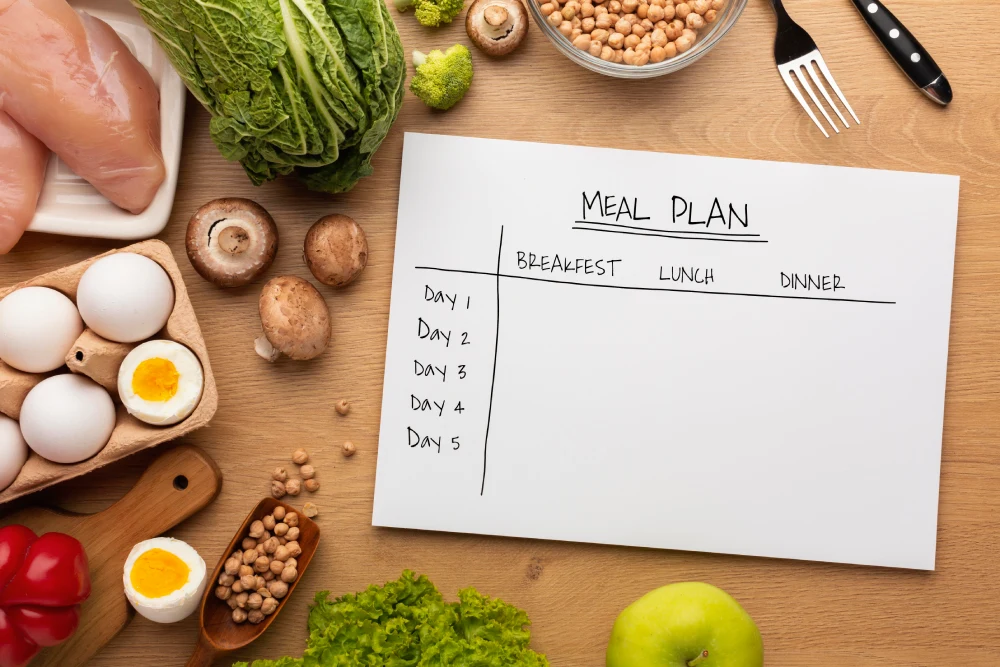
Meal planning removes half the struggle
A lot of the difficulty is not hunger, it’s decision-making.
What to eat, when to eat, how much to eat.
Meal planning for weight loss solves that.
When meals are already decided:
- No last-minute choices
- No overeating from confusion
- No random snacking
A calorie deficit becomes routine instead of effort.
Tracking calories without making it stressful
Calorie tracking helps, but it does not need to take over everything.
Start simple:
- Track main meals
- Get used to portion sizes
- Stay consistent, not perfect
Over time, a calorie deficit becomes something that can be managed without thinking too much about it.
Burning calories without overdoing it
Movement helps. But it does not need to be intense.
Walking, staying active, basic workouts.
These support a calorie deficit quietly.
No need to push to extremes. In fact, too much intense exercise can increase hunger and make the calorie deficit harder to maintain.
Simple movement works better long term.
Different diets, same foundation
There are many styles out there.
Low calorie diet, low carb diet, keto recipes, high protein meals.
All of them can work.
But they all come back to the same thing: calorie deficit
That’s the base.
The style just makes it easier to follow depending on preference.
Meal preparation makes consistency easier
When food is ready, everything changes.
No thinking, no guessing, no rushing into quick unhealthy options.
Meal preparation supports a calorie deficit without needing constant willpower.
It turns effort into habit.
Mistakes that quietly slow everything down
Sometimes the issue is not effort, it’s small mistakes.
Eating too little early in the day
Leads to overeating later.
Ignoring small extras
Oils, sauces, drinks. They add up quickly.
One day undoing everything
A weekend of overeating can cancel days of calorie deficit.
Small things, but they matter.
A simple daily structure that works
Nothing complicated here.
- Breakfast: eggs, oats, fruit
- Lunch: chicken, rice, vegetables
- Snack: yogurt or nuts
- Dinner: lean protein with salad
This kind of structure supports a calorie deficit without making it feel restrictive.
Long term approach always wins
A calorie deficit is not something to rush through.
It works better when:
- Food is still enjoyable
- Meals are satisfying
- There is flexibility
- There is consistency
That is what keeps it going.
Not perfection. Just steady control.
Conclusion:
A calorie deficit is not about forcing less food and dealing with hunger all day. It’s about understanding how to eat in a way that keeps the body satisfied while still creating that small gap needed for fat loss.
When that balance is right, things start to feel easier. Hunger settles down. Energy stays stable. And results start showing without constant struggle.
Frequently Asked Questions
How to stay full in a calorie deficit?
Eat more protein, add veggies and fruits, drink water, and don’t skip meals. That’s what keeps you full.
Do you need to track calories?
Not really. It helps, but you can manage with good portions and consistency.
Why does weight loss stop?
Usually small things—extra calories, bigger portions, or your body just adjusting.
What foods keep you full?
Protein, fiber, whole foods. Simple.
Can you lose weight without exercise?
Yes. But moving a bit, even walking, helps a lot.
How big should the deficit be?
Keep it moderate. Around 300–500 calories is enough.
Can you eat rice and bread?
Yes, just watch the portion.
Why more hunger at night?
Because you didn’t eat enough earlier in the day.
When do results show?
Usually in 2–4 weeks if you stay consistent.
Can you eat out?
Yes. Just don’t overdo it.