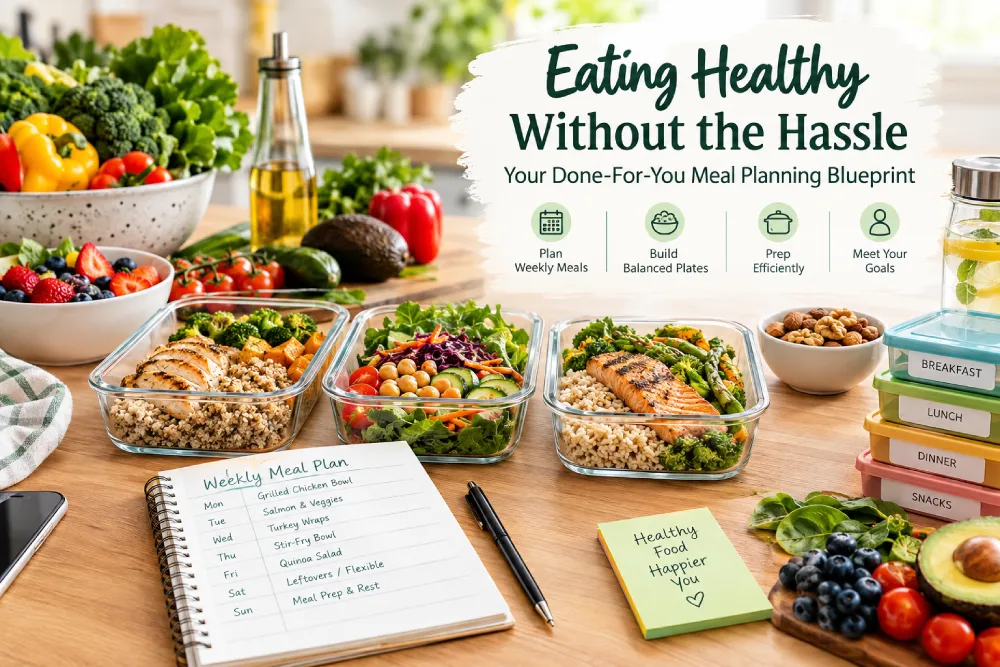
Eating healthy can feel difficult when you have to decide what to make, buy, and eat every day. A busy schedule can lead to skipped meals, takeout, or quick food choices that are not part of your usual routine. A simple meal-planning system can remove that daily guesswork and make meals easier to manage.
This guide explains how to plan weekly meals, build balanced plates, prepare food efficiently, and adjust meals to your needs, so eating healthy feels simpler and more practical.
Why Eating Healthy Feels Harder Than It Should
The most difficult part is not knowing which food items are nutritious. It’s turning the knowledge into a routine. A hectic workday and a refrigerator that’s empty or a meal that is not planned could quickly result in more convenient but unbalanced choices.
An alternative is to develop a straightforward routine that you can replicate. A healthy diet must be compatible with your timetable, preferences for food, as well as your budget and cooking style. When you plan your meals ahead and plan them out, you will have fewer decisions to make when exhausted or when you have a short time.
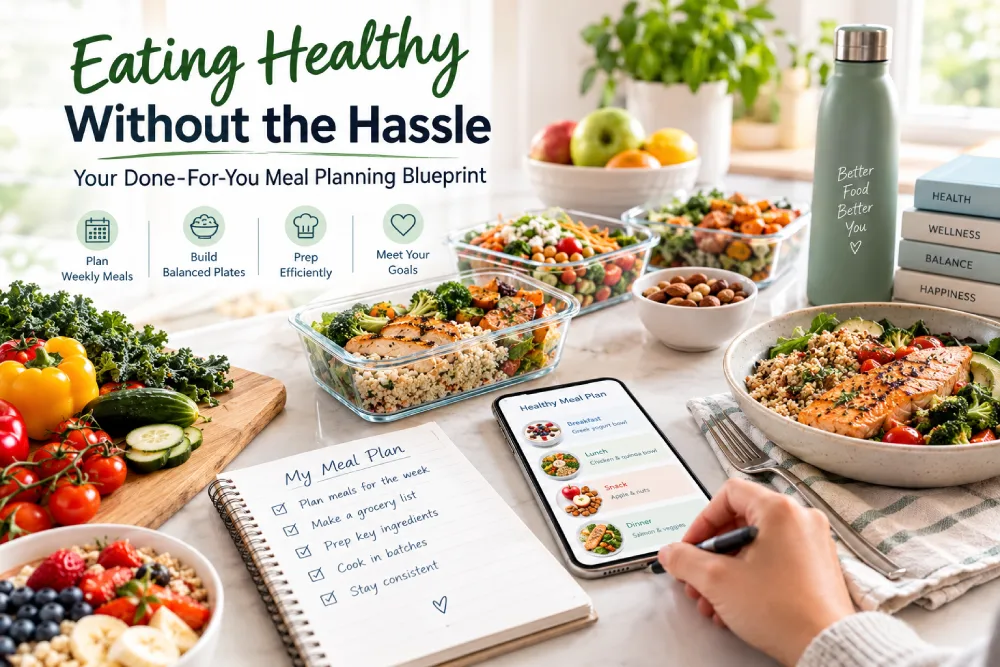
How to Plan Meals for the Week Without Overthinking It
Begin by looking over your next week. Find busy times of the day, as well as evenings with plenty of time for cooking, as well as days where leftovers are a good way to make it easier to save time. This means how to plan weekly meals is easier since the menu you choose to make is based on your current timetable.
Create meals around a simple mixture of protein, veggies or fruit, which is a complete carbohydrate, and an excellent food source for healthy fat. For instance, grilling chicken served with roasted veggies, brown rice, and avocado makes a delicious, balanced meal that does not require complex recipes.
Use Ingredients More Than Once
Pick ingredients that can be used throughout a variety of meals. Chicken cooked in the oven can be a lunch bowl, wrap, or salad. Roasted vegetables are a great accompaniment to dinner, or can even be incorporated into an omelet for breakfast the next day.
A Simple Weekly Meal Planning System
Effective daily meal planning is not a requirement for seven distinct meals, breakfasts, or dinners. A few consistent meals can cut down on preparation time and still give you plenty of variety.
Utilize this five-step method:
- Select the meals you want to eat: Pick simple breakfast meals, lunches, dinners,s and snacks.
- Make sure you have a kitchen that is clean: Use ingredients you already have prior to shopping.
- Create a food list. Classify items according to proteins, produce,e grains, dairy, and pantry food items.
- Key ingredients to prepare: Cook proteins, grains, or veggies in small batches.
- Allocate the days of meals: Make flexible choices for sudden schedule shifts.
The objective is to make eating healthy more convenient on weekdays and not to come up with an ideal menu that is difficult to adhere to.
Build a Daily Meal Plan for Weight Loss or Wellness
A daily meal plan for weight loss is one that’s practical enough to adhere to regularly. Instead of relying upon complicated recipes, concentrate on meals that fill you up with healthy foods and portions that are suited to your personal requirements.
For instance:
| Meal | Simple Option |
| Breakfast | Greek yogurt, fruits, and Oats |
| Lunch | Brown rice, chicken, and vegetables |
| Snack | Apples with nuts and butter |
| Dinner | Salmon, potatoes, and mixed vegetables |
Healthy Foods to Eat EveryDay: What to Keep on Hand
Being able to have nutritious food items on hand can make eating healthy more practical. Instead of cramming your kitchen with food items that you don’t make use of, keep a stock of versatile ingredients that can be used to make different meals.
The most useful categories are:
- Fish, eggs, poultry, beans
- Leafy greens
- Fruits that are fresh or frozen
- Brown rice, oats, whole-grain bread, and other whole grains
- Nuts and seeds
- Yogurt or alternative options
- Lentils and beans
- Simple herbs, olive oil, and olive oil or spices
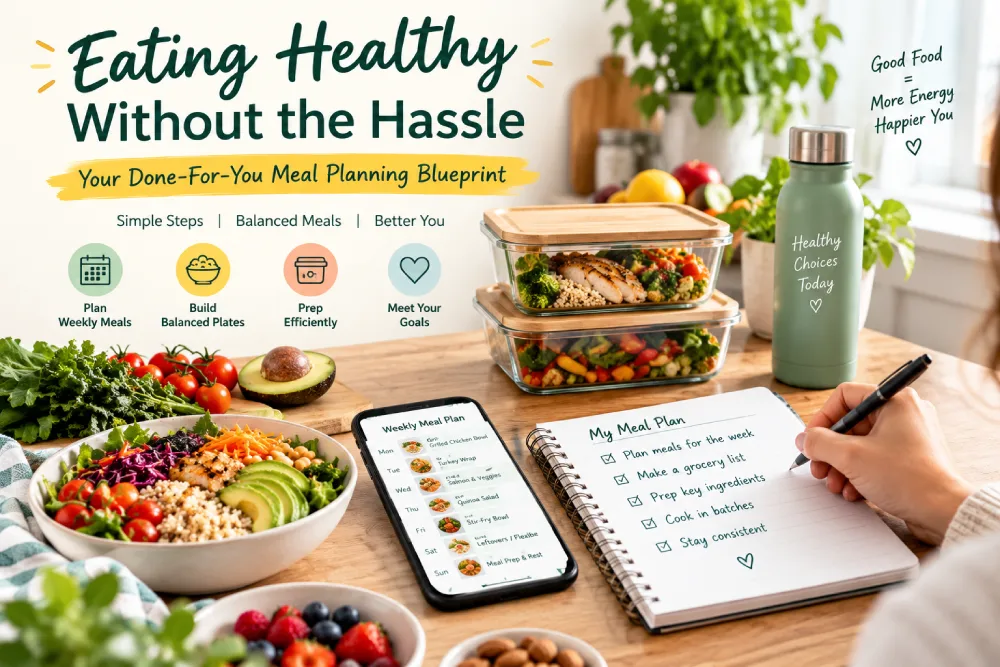
Meal Prep Without Spending Your Whole Weekend in the Kitchen
It is not necessary to cook every meal in advance. Instead, make components that can be mixed quickly. Prepare a pot of grains, wash and clean vegetables, then prepare proteins, and divide snacks into containers that are ready to use.
A quick preparation session will make busy evenings simpler. Make sure that some of your ingredients are flexible so you can make changes to your meal depending on what you’d like to consume. This will prevent your meal preparation from becoming monotonous and can aid in eating healthy in the long run.
Conclusion
A healthy diet doesn’t need to be a time-consuming process of cooking or relying on a set menu. Whatever your goals are, whether it’s general health as well as better organization, or meal prep for weight loss, the same concept applies: make healthy options easy to find.
Frequently Asked Questions
What is the easiest way to start eating healthy?
Begin with a few easy meals before the week starts. Pick foods that you love and keep healthy foods on hand, and cook ingredients that you can use for a variety of meals.
How do I plan meals for the week?
The first step is to review your schedule and pick meals that will fit the time you have available. In the kitchen, prepare a shopping list, cook the essential ingredients, and allocate meals to certain days.
What should a healthy weekly meal plan include?
A balanced, healthy meal plan for your week includes a variety of proteins, veggies, fruits, whole grains, as well as legumes, nuts, seeds, and other healthy food items.
Can meal planning help with weight loss?
The planning of meals can help you make meals ahead of time and to make informed choices regarding food.
What are healthy foods to eat every day?
The most popular choices are fruits, vegetables, and protein-rich food items, including whole beans, grains, nuts, seeds, as well as suitable dairy products or alternatives.
How many meals should I prepare ahead?
There is no one specific number. Many people cook multiple complete meals, whereas others cook ingredients and prepare meals throughout the week.
What is personalized nutrition?
The personalized nutrition program adapts meals and food choices according to a person’s needs and preferences, lifestyle, and objectives.
How can I make meal prep easier?
Make a batch of grains and proteins, clean produce ahead of time, portion snacks, and mix ingredients into several recipes.
Is a sustainable diet better than a restrictive meal plan?
A sustainable diet is focused on habits that can be maintained over the course of time. Flexible meals and diets that suit your tastes will allow you to follow rather than overly strict guidelines.
How can I stay consistent with weekly meal planning?
Keep a few meals on hand for busy days. You can also use leftovers wisely and then adjust your plan for the week ahead in light of what worked and what didn’t.