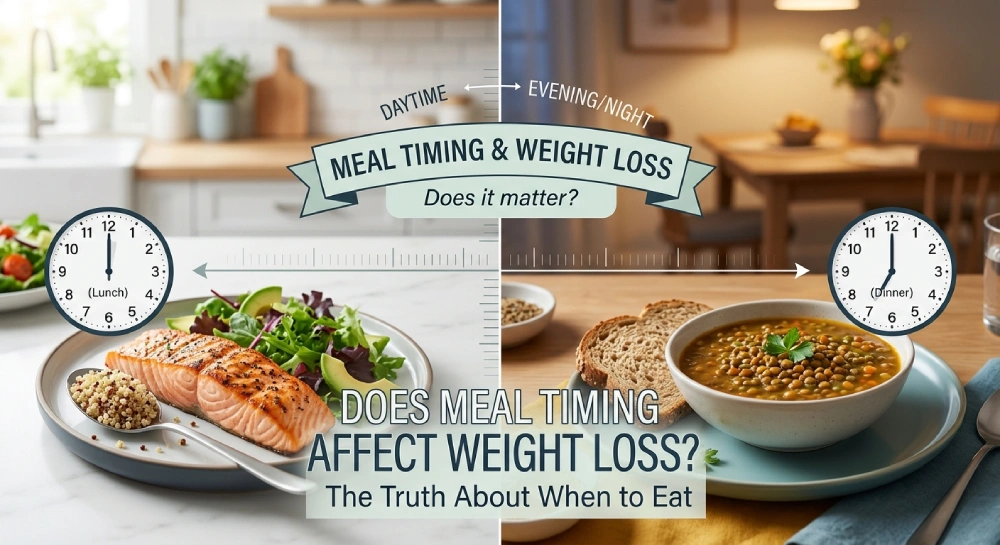
Many people wonder whether eating at a certain time can make weight loss easier or harder. Meal timing can influence hunger, energy, and eating habits, but it is only one part of the bigger picture.
It’s more important to focus on total food consumption, food quality, activity, sleep and regularity, rather than an ideal eating plan.
What Is Meal Timing?
Meal timing is the time of day when meals and snacks are consumed. This may cover time of breakfast, lunch and dinner, how often and when most food is eaten, as well as when there is more food eaten in the morning or evening.
No one schedule fits all. The optimal eating pattern can vary depending on work schedule, sleep habits, preference and appetite.
Does Meal Timing Actually Affect Weight Loss?
The indirect effect of meal timing on weight loss can impact on how people eat during the day and their appetite. But sticking to a new time schedule doesn’t necessarily mean weight loss.
For instance, consuming more calories at night does not necessarily mean that one will gain weight, as long as there is a proper amount consumed. Perhaps the bigger problem is that late night eating tends to be more snacking or increased portions.
Why Do Total Calories Matter More Than Timing?
In the case of weight management, the total amount of calories consumed is more critical than the specific time of day they are consumed.
Weight gain is possible even if the calories are taken in the morning or evening, as long as they are excess calories for the body.
A healthy approach consists of:
- Appropriate portion sizes
- Nutrient-dense foods
- Regular physical activity
- Adequate protein
- Consistent eating habits
These habits can be helped by meal timing, but it can’t take the place of the habits.
Can Meal Timing Help With Hunger Control?
Yes. For some people who struggle with hunger, it can help to maintain a regular eating schedule. If you wait more than two hours before eating, you may become so hungry that you eat too much.
Some may opt for less food since they think about it too often when eating often. The ideal time sequence is the one that allows people to maintain their hunger without giving the false impression that they need to snack.
How Does Intermittent Fasting Affect Meal Timing?
Intermittent fasting is not about restricting yourself to particular foods, but it’s about restricting your eating window. Some of the popular strategies are to follow the 16:8 method or the 24 hours of fasting.
It can make it easier for some people to lose weight as a shorter eating window means they might eat less on the whole. But it is not necessarily better than other methods if it comes to the same number of calories.
Does Eating Before Bed Cause Weight Gain?
Just because you eat before bed doesn’t mean you’ll gain weight. It is more important what is eaten over a 24 hour period rather than daily amounts. But late-night eating can be a problem when it is of high calorie snacks, too big of portions or eating when not hungry. A small, balanced snack is okay for a true hunger condition.
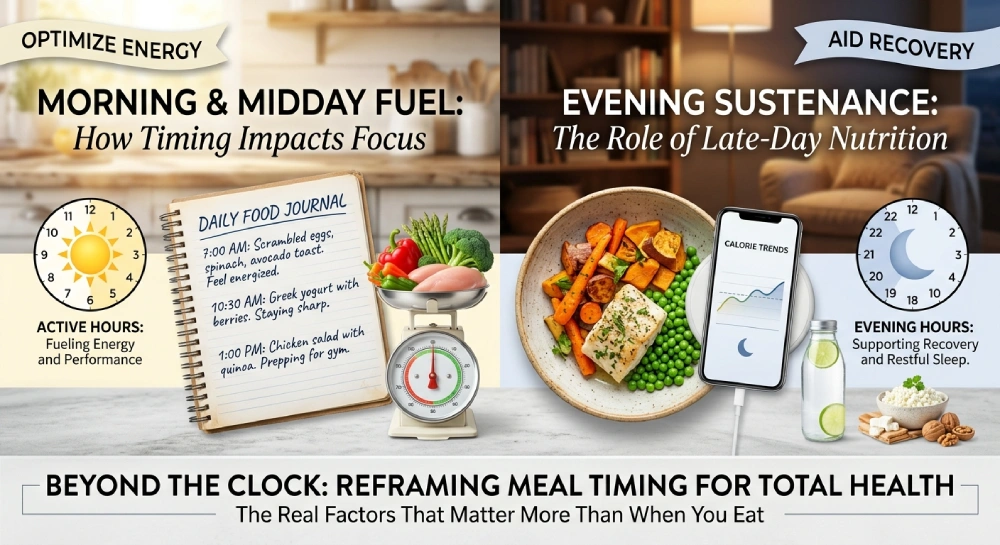
Are Frequent Meals Better for Weight Management?
Too many meals does not necessarily mean good for weight management. Others would prefer to have 3 big meals or they would prefer to eat smaller meals throughout the day. Don’t adhere to a set guideline about the number of meals per day; instead, meal frequency should support hunger, energy, lifestyle and calorie intake.
Why Is a Balanced Breakfast Important?
A well-balanced breakfast may provide protein, fiber, carbohydrate and other components to help get the day started. A breakfast for some people helps to reduce their hunger and cravings during the day.
But, for some, breakfast isn’t a must for weight loss. Eating a healthy breakfast doesn’t necessarily have to mean making up for the calories at lunch, as long as you skip breakfast without becoming too hungry later in the day.
How Does Daily Protein Intake Affect Hunger and Weight Management?
Protein should be consumed in sufficient amounts (daily protein) for maintaining muscles and can help with fullness. Meals can also be more filling if they contain foods high in protein.
Eggs, fish, poultry, lean meat, beans, lentils, yoghurt, cottage cheese, tofu and other protein-rich foods are good choices.
What Is the Best Meal Timing for Weight Loss?
There is no one-size-fits-all eating plan. The best is one which allows for a reasonable calorie intake, good nutrition, hunger management and a routine that can be sustained.
For some, that can be three normal meals. Some may choose to have fewer meals, or a time restricted eating pattern.
It is more important to eat at the same time each day than at the exact hour.
Conclusion
So, does meal timing affect weight loss? It may affect eating habits and the variety of foods consumed, and it may affect routines, but this is not enough to guarantee success.
First things first, calories, healthy foods, protein, exercise, sleep and habits. Next, select times of day that work best for you, and make your eating habits more effortless.
Frequently Asked Questions
Does meal timing affect weight loss?
The amount of calories consumed before, during and after meals can affect appetite and food intake, while the overall amount of calories eaten and diet quality are the primary factors that determine weight gain or loss.
Is eating before bed bad for weight management?
Eating before bed is not automatically harmful. The concern is more often related to consuming extra calories or large portions at night rather than the clock itself.
Does intermittent fasting help with weight loss?
While some individuals benefit from intermittent fasting for calorie reduction and weight loss, it doesn’t necessarily work better than other calorie-controlled eating plans.
Are frequent meals better for controlling hunger?
For some, eating often helps to control hunger; for others, eating less often helps to control hunger. This will vary based on an individual’s appetite, routine, food choices and overall calorie intake.
Should you eat breakfast to lose weight?
It is not mandatory for all people who want to lose weight to have to eat breakfast. Some people find it helps to have a snack early in the day to help them stop eating as much, others prefer to eat first in the evening.
Does eating late at night cause weight gain?
Late-night eating itself does not guarantee weight gain. However, nighttime snacking can increase total calorie intake, particularly when portions are large or foods are highly calorie-dense.
How many meals should you eat per day?
No specific number of meals to be followed during weight loss. For some, three meals could be sufficient; others may opt for fewer or smaller meals as needed, their schedule, and their appetite suggests.
Does meal timing matter if total calories are controlled?
However, when everything is taken into account, the timing of meals tends to have less of an impact on weight changes when calories are limited. Hunger, energy, food selection and ease of implementation of the diet may still be affected by timing.
How does protein intake affect weight management?
Protein can help to provide a sense of satiety and maintain muscle. A protein-rich diet can help to satisfy a calorie-controlled diet.
What is the best time to eat for weight loss?
The best time is different for everybody. Typically, a consistent timeline that allows for sufficient calorie consumption, proper nutrition, adequate hunger management and adherence will be the most practical option.