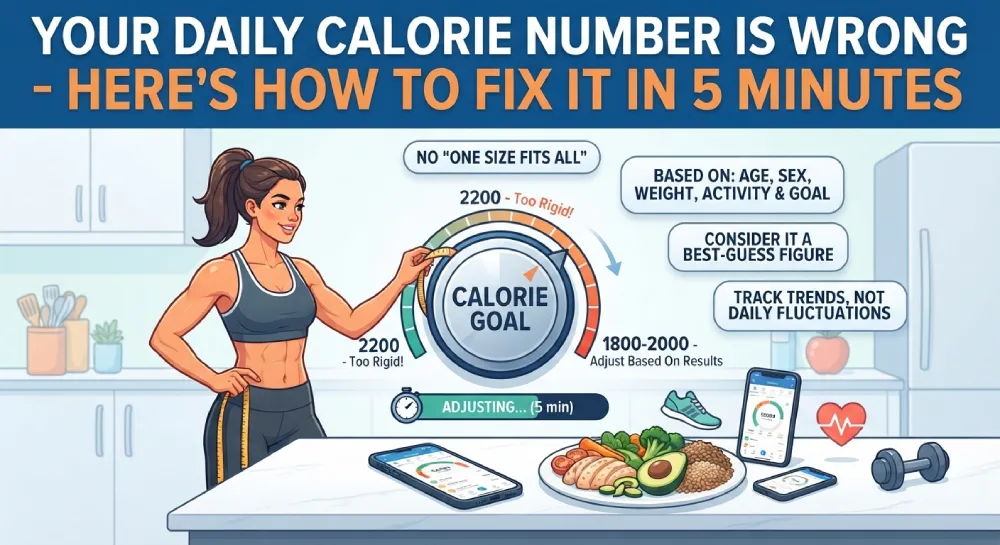
There is no set number of daily calories you should be aiming to eat. It’s based on your age, sex, height and weight, activity level and goal. This is one reason why you shouldn’t just try and copy and paste a calorie goal from an app or calorie calculator. To lose weight, maintain weight, or to become fitter, it is important to understand what your daily calories are, without being obsessed with them.
How Many Calories Should You Eat Each Day?
So, how many calories should I eat? There’s no one right answer for everyone. It depends partly on your daily energy level to determine what maintenance you require. Basic body functions, movement, exercise and daily activities.
To determine how many calories to maintain weight, begin with the calories you think you need to maintain your weight and then monitor your weight over a couple weeks. When your average weight remains more or less the same, your calories consumed per day is likely about right to maintain your weight.
The calories burned vary every day, as well. You can raise your energy consumption by engaging in a workout, an active work activity or walking more. That’s one of the reasons why your daily calories should be considered as a best-guess figure not a definitive number.
How Do Calories Affect Weight Loss?
But if you are on a weight loss mission, you might be wondering how many calories to lose weight. Calorie deficit: When you consume less energy over time. There is no need to make an extreme deficit. Moderate and sustainable ways are typically easier to maintain.
It’s also crucial to know how many calories in 1 kg? A commonly used estimate is 7,700 calories per kg, but the number of calories individuals lose in real life is not 100% accurate. Even if you’re eating the same number of calories, you might experience weight fluctuations due to changes in water, glycogen, food volume and more.
While it may be helpful to keep track of the number of calories consumed, it’s still important to pay attention to the quality of the food. Eat more protein, veggies, fruits, whole grains and healthy fats instead of eating as little as possible. There are no specific foods that burn calories that are able to affect your overall energy balance. Food can be a little more energy intensive to digest and/or leave you feeling full, but it won’t make you lose fat.
How Can You Fix Your Calorie Target?
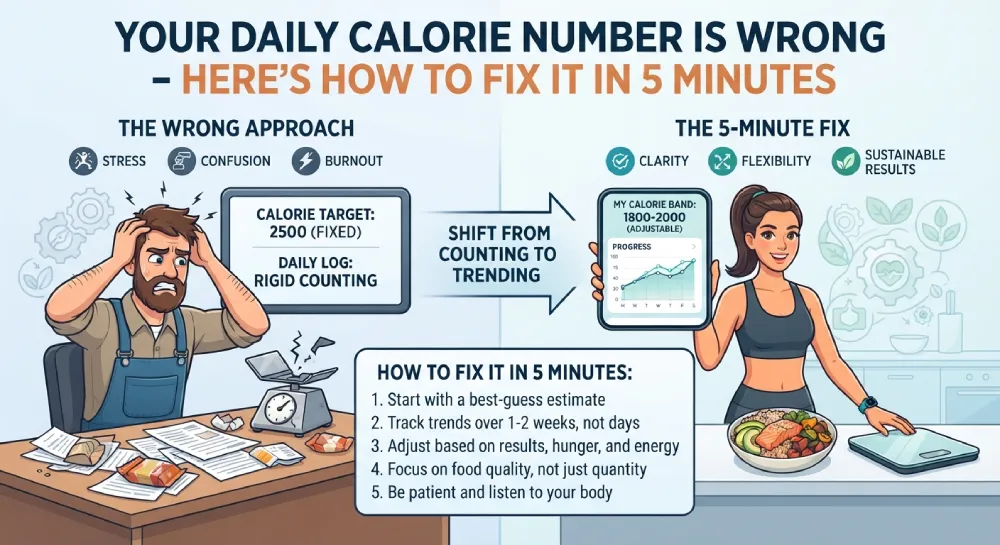
Begin by making estimates and then compare your estimates to your actual trend in weight. Log your food for an extended period to see your weight over time and not just one day at a time.
If you are maintaining your weight, but are looking to shed fat, then start cutting down on calories or upping activity levels. If you have a target that is too high, or you feel too hungry, or your weight loss is faster than you would like, then the target may be too high.
The objective is to look for only one correct answer. Practically, a number you can work towards that can be adjusted according to your results, activity and how you feel is a good starting point for your daily calories.

Conclusion
There is no fixed number for the right amount of calories, it varies by individual and lifestyle. Estimate the amount of maintenance you need as a starting point, track your calories consumed, and be aware of trends over time not day-to-day.
Keep in mind that weight loss and gain are normal. It’s better to stick with a balanced strategy that makes steady changes, rather than making drastic changes every time it moves.
Frequently Asked Questions
How many calories should I eat?
The number of calories I should eat will depend on my age, sex, height, weight, diet and my goals. The amount of calories you burn while trying to lose weight won’t be the same as the amount you burn when you’re at maintenance.
How many calories should I eat to maintain my weight?
The amount of calories to maintain weight will vary according to the amount of energy that your body requires each day. A maintenance level can be determined and adjusted according to your weight trend.
How many calories should I eat to lose weight?
The number of calories one should consume to lose weight varies according to one’s energy requirements. Taking in a moderate amount of calories in a deficit can help you lose weight slowly and still eat enough.
How many calories are in 1 kg?
The number of calories in 1 kg is estimated at 7,700 calories of stored body fat, but actually the weight change is more complex as it includes body water and other body tissues.
What are calories consumed per day?
Calories consumed per day refers to the amount of energy (calories) that you receive from food and beverages over a 24 hour period.
What are calories burned?
Calories burned are the calories your body uses for basic functions, digestion, movement, exercise, and other physical activity.
Why does my weight fluctuate even when I eat the same calories?
Weight fluctuations may occur as a result of water retention, sodium, hormones, digestion, carbohydrate consumption and other normal changes. Weight fluctuations everyday don’t necessarily indicate fat loss or fat build up.
Should I count calories consumed?
Some people may find tracking calories consumed useful to improve understanding of portion sizes and eating patterns, but others don’t need to do this. Quality of food is also a factor as well as sustainable habits.
Do foods that burn calories really exist?
There are no foods that burn calories enough to override your overall energy balance. High protein or high fiber foods may help you feel full and can help be a part of a healthy eating plan.
How many daily calories do I need?
Your daily calories vary from person to person and for everyone, according to how active they are. Work from an estimated calorie requirement and fine tune it according to what goals you are trying to achieve and how you are progressing.