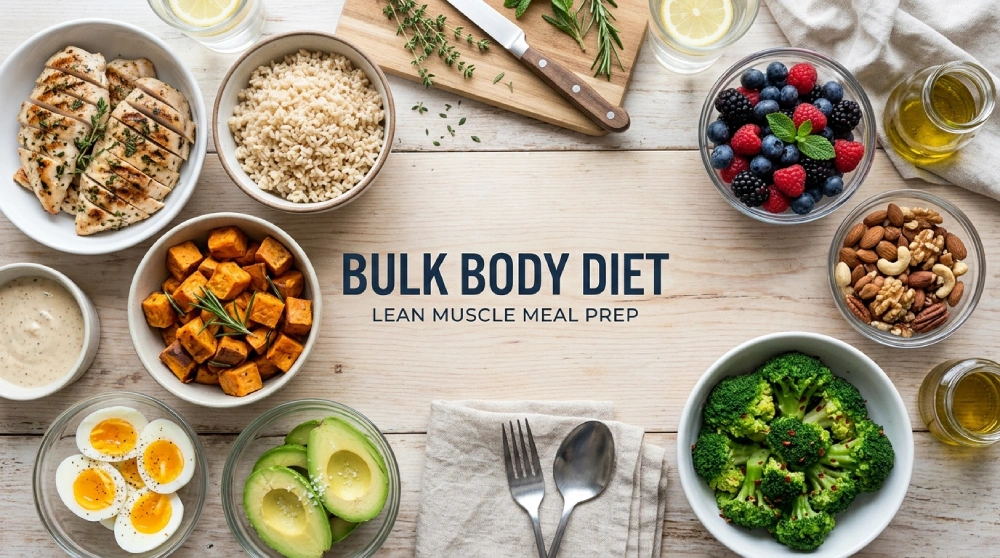
Bulk body nutrition is eating the right food items to build muscle and not gaining excess body fat. If you’re training for a long time but aren’t seeing an increase in strength or size it is possible that your diet might not be providing enough protein, calories, or carbs.
An effective best diet for muscle building is to combine a controlled increase in calories along with healthy food choices and consistent exercise.
In this article you’ll discover what foods to consume, best foods for clean bulking, best bulking exercises, how to arrange the meals you eat, as well as what food items can help you to bulk lean muscle faster.
What Is a Bulk Body Diet?
A diet for the bulk of your body is a nutritional approach that is designed to help support the growth of muscle and increase size by giving the body more energy than what it requires.
A good bulking diet typically comprises:
- Protein-rich foods for muscle repair
- Carbohydrates to boost workout energy
- Healthy fats to help calories and general nutrition
- Fruits and veggies for minerals, vitamins, and fiber
- There are plenty of liquids available to aid in the process of hydration
Start With a Calorie Surplus
A calorie surplus is when you are eating more calories than you burn. Some people would say that it is easier to have a small surplus, rather than to eat a lot more.
For example, if I ate three meals to keep my weight stable, I could add some calorie dense snacks to those meals, and maybe have a bigger portion of rice or a second protein in addition to those meals, instead of doubling the size of each meal.
What to Eat for a Clean Bulk
When choosing the right food items for bulk consumption look for foods that are rich in the necessary calories as well as useful nutrients. It is not necessary to have to have a perfect diet, however the majority of your meals should be from food items that are minimally processed.
Some good options include:
| Food group | Examples |
| Protein | Eggs and chicken and beef lean, fish, Greek yogurt and beans |
| Carbohydrates | Oats, rice and whole-grain bread, potatoes, pasta |
| Healthy fats | Nuts, seeds, avocado, olive oil, nut butter |
| Produce | Bananas, berries, oranges, spinach, broccoli |
These food items can also be the base of the best diet for healthy bulking since they allow you to boost calories without relying heavily on processed food items.
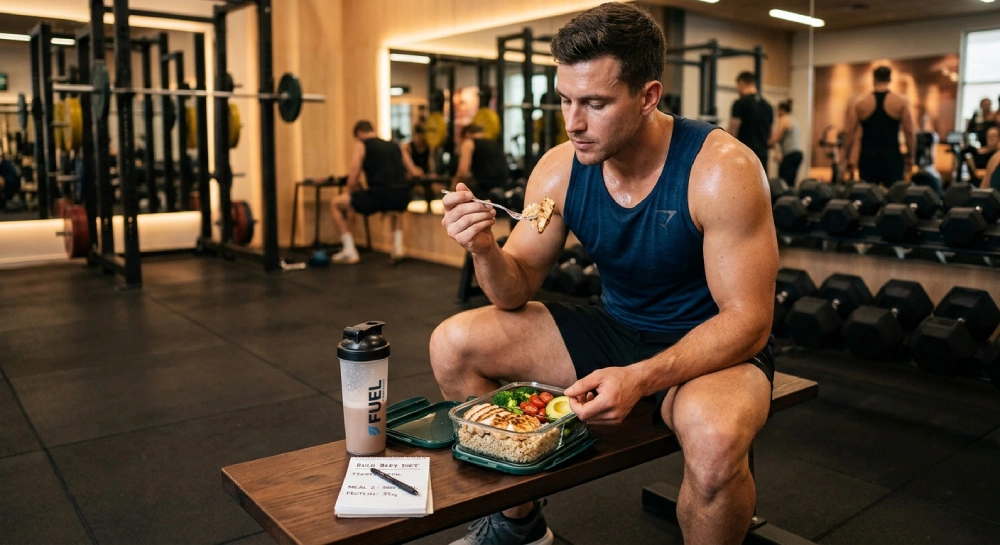
Eating for Bulking: Build Balanced Meals
Eating for bulking is easier to eat for bulking when every meal is clearly defined. Instead of counting every bite, plan meals around proteins, carbohydrates and fruits, or vegetables, as well as a source of healthy fats.
For instance, lunch might include cooked chicken, rice, olive oil, vegetables and fruits. Following training, eating a nutritious meal with carbohydrates and protein could provide energy replenishment and the necessary nutrients to recover.
A practical bulk-lean muscle meal pattern can be like this:
- Breakfast: Oats, milk, banana, eggs along with peanut butter.
- Lunch: Rice, chicken vegetables, chicken along with olive oil.
- Snacks: Greek yogurt, fruit and nuts.
- Dinner: lean beef or fish, potatoes, and other vegetables.
A snack option: Milk, cottage cheese or a protein-rich food item..
How to Structure a Bulking Workout Plan
Nutrition is best when it is combined with an exercise program that is progressive in nature. A workout program that is bulky will give the major muscle groups regular exercise and allow enough time for recovery between workouts.
Concentrate on compound movements like presses, squats as well as deadlift variations and pull-ups. You can also add exercises that are isolated when you can use them. The most effective bulking exercises aren’t always the most complex ones. The consistency, technique as well as sleep, progressive overload and recovery are crucial.
If the volume of your training increases your body bulk nutrition might also require adjustments to ensure you are able to recover and perform.
Simple Bulking Diet Meal Plan
A simple, cheap diet that will see you bulk up should be made up of foods that you already know and love. The only difference is you need to eat more than you are used to in order to put on weight.
A normal day may consist of eating eggs and oats for breakfast, then rice and chicken for lunch. In the afternoon, you can have a snack of yoghurt with some fresh fruit and nuts and for dinner, lean beef or fish with potatoes.
A meal plan for bulking is then able to be altered depending on your appetite, your fitness schedule, progress and preferences in food.
Common Bulking Mistakes to Avoid
Do not turn a bulk body diet into a lifestyle of unlimited eating. A diet that is too high in calories could result in an unneeded weight growth.
Common errors are:
- A diet that is mostly junk food
- Ignoring protein
- Not eating vegetables and fruits
- You shouldn’t be changing your plans too often.
- Not getting enough rest
- Food that is way beyond your requirements
A calorie surplus that is controlled is typically much more manageable than a drastic approach.
One Important Thing to Remember
Bulking is a slow process no matter what your bulking goal is. You don’t have to be perfect with every single meal. Just try to eat consistently, get enough carbs, proteins, and healthy fats, train, and recover properly and if one thing doesn’t seem to be working for you, change that up instead of changing everything. Bulking is a gradual process for any bulk body goal.
Conclusion
A successful bulk body strategy is built on a consistent diet and a well-designed resistance training. Choose foods with high nutritional content over those empty of calories. Go with a calorie surplus that is not that big and have enough protein throughout the day.
Keep track of the progress and make changes to the plan when necessary. In the end, you should concentrate on slow muscle growth instead of quick weight growth. With perseverance and consistency your bulk body program can help build stronger fitness.
Frequently Asked Questions
What should I eat to gain muscle?
Consume protein-rich food such as carbohydrates, healthy fats as well as fruits and veggies while ensuring the proper amount of calories for a bulk body diet.
Is a calorie surplus necessary for bulking?
The majority of the time, building muscles is easier when you have enough energy intake. A well-controlled surplus can aid in development while also limiting fat growth.
Can I bulk without eating junk food?
Yes. Oats, rice, potatoes, eggs, potatoes dairy, meat nuts, fruits, beans and other food items that are nutrient-dense can supply plenty of calories to bulk up.
How much protein should I eat when bulking?
Protein requirements vary based on the size of your body, how active you are and the individual’s conditions. A balanced diet that has the right amount of protein spread throughout meals is an effective strategy.
What is the difference between lean bulk and dirty bulk?
Lean bulk is characterized by the controlled increase in calories and the nutrient-dense food items, whereas an unhealthy bulk generally requires an unintentionally sloppy approach to food.
Can beginners follow a bulking diet?
Yes. For beginners, it is possible to use basic meals and slowly learn how portions as well as training, recovery and progression work together.
What are good foods for a calorie surplus diet?
Rice, oatmeal and potatoes, whole grains, eggs, almonds, dairy products, avocado, butter and lean meats may aid in boosting calories.
Do I need supplements to build muscle?
Not necessarily. Supplements can be useful however a healthy diet will provide plenty of the essential nutrients to build muscle.
How long should I follow in bulk?
There isn’t a universal timetable. Maintain your progress as long as it is effective, keep track of the body’s composition and performance and alter your diet as required.
Can I gain muscle without gaining any fat?
It’s not easy to ensure no fat gain during an exercise phase that builds muscle. A well-controlled surplus and regular training will help to keep any excess weight from becoming a problem.