Weight maintenance may become challenging after achieving a weight that is comfortable, particularly when portions are increased,d activity decreases, plans shift, or sleep issues are experienced. There is no simple diet that works. The most effective way of controlling weight is that which takes into account practices that are sustainable in the daily grind, during holidays, and in tough times.
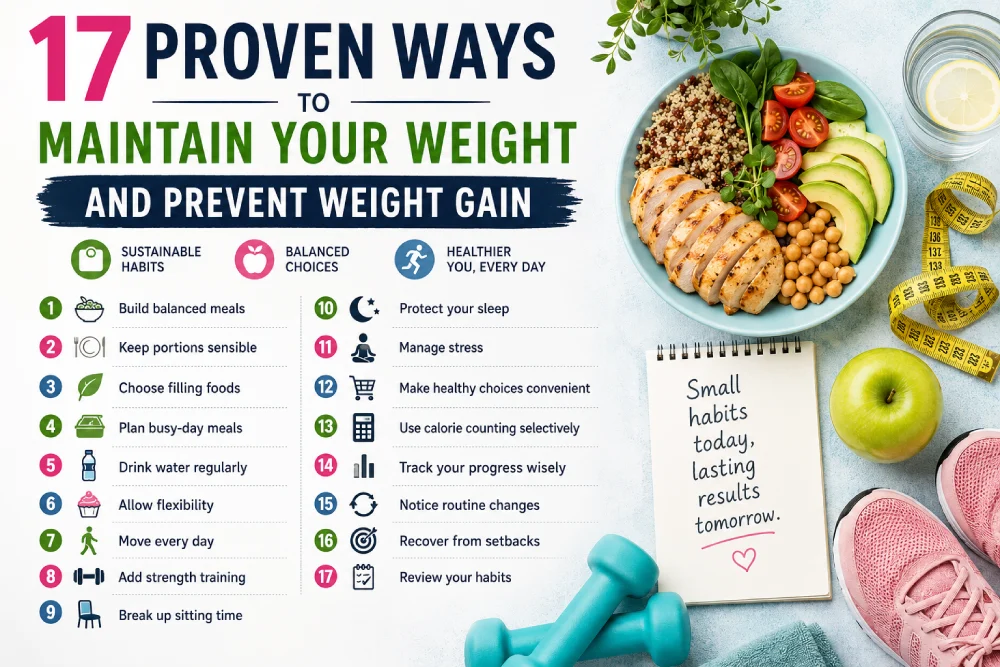
17 Practical Habits for Weight Maintenance
- Build balanced meals: Combine protein, fruits or vegetables, high-fiber carbohydrates, as well as healthy fats when needed.
- Keep portions sensible: You do not have to weigh everything. Make sure you serve portions in a reasonable amount, take your time eating, then eat slowly and be aware of the feeling of fullness and hunger.
- Choose filling foods: Beans, eggs, fish, yogurt, lean meats, vegetables, fruits, and whole grains are a great way to provide a more satisfying meal.
- Plan busy-day meals: Preparing lunch and snacks ahead of time will help you avoid eating out if you are feeling hungry.
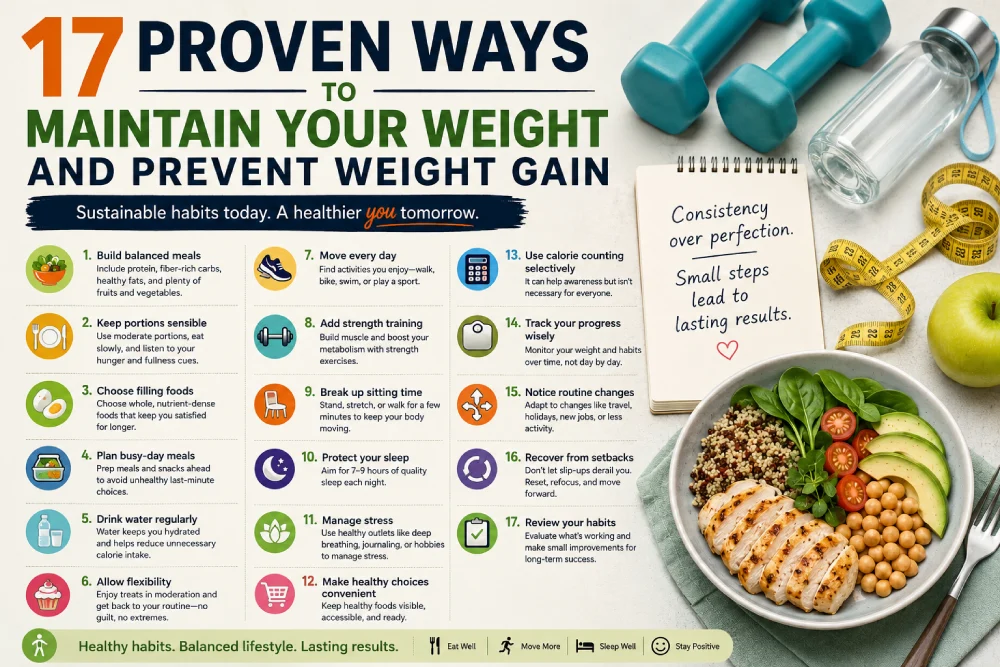
- Drink water regularly: Take water as your daily drink whenever possible. Sweets drinks are not very filling and can add unnecessary calories to the diet.
- Allow flexibility: Enjoying dessert at the celebration will not erase your progress. Just return to your regular routine immediately following.
- Move every day: Walking, cycling, swimming, sports, or other activities that are enjoyable can help you keep an active life.
- Add strength training: Lifting weights or performing bodyweight exercises can help build muscle strength and aid in maintaining muscle mass.
- Break up sitting time: Stand, stretch, or walk for a short time when you sit at work to add an extra dose of movement to your day.
- Protect your sleep: Sleep deprivation can make managing appetite and healthier decisions more challenging. Make sure you have a consistent schedule for your sleep.
- Manage stress: Walking, journaling, breathing exercises, hobbies and even social support can offer better ways to manage difficult times.
- Make healthy choices convenient: Keep fruit, yogurt, or cooked meals at hand instead of completely relying on your willpower.
- Use calorie counting selectively: Calorie counting may increase awareness of portions; however, it’s not required for everyone.
- Track your progress wisely: Weight tracking will help you detect subtle changes. Concentrate on trends instead of responding to a single reading.
- Notice routine changes: Travel, holidays, a new job or a reduction in activity could alter the way you live. Recognize the changes and adapt accordingly.
- Recover from setbacks: A few high calorie meals don’t require the use of a crash diet. Resuming normal eating habits and activities, as well as hydration and rest.
- Review your habits: Regularly consider what is working and what has been slipping. Small changes can aid in weight maintenance better than radical modifications.
How to Respond When Weight Gain Starts
If their weight is increasing over several measurements, they should consider their entire lifestyle before doing anything extreme. They should try changing their diet, or what they eat and drink, how much they eat, what and when they eat as snacks, how much they exercise, and how much they sleep. Weight maintenance does not mean that the scale has to be precisely the same every day because it is normal for it to fluctuate.
When Professional Support Makes Sense
A registered dietitian or a qualified healthcare professional can assist you in the event that trying to maintain weight is difficult, or when medications, medical conditions, or dietary issues affect your goal.
Professional weight maintenance assistance can address eating patterns as well as sleep, physical activity, and goals that are realistic while aiding you to avoid restrictive diets as well as extreme strategies.
Conclusion
The success of weight maintenance relies on consistent behavior and not a diet that is perfect. A balanced diet, a sensible portion, and regular exercise, as well as fitness training, enough sleep, stress management and careful monitoring help to prevent unnecessary weight gain. There is no need to make drastic changes at once.
Select two or three habits that work with your current routine and implement the same routine.
Frequently Asked Questions
What is the best way to prevent weight gain?
Make sure you eat regularly, in reasonable portions, regular exercise regular sleep, and maintain regular routines for your day. Small adjustments are typically more manageable than drastic adjustments.
Is calorie counting required?
No. Calorie calculation is not required and many people are able to choose to focus on healthy meals, portions, eating habits, and quality.
Can lifting weights support weight maintenance?
Yes. Weight lifting can help build the strength of your body and preserve the muscle mass when it is part of a well-balanced exercise routine.
Does sleep affect maintaining weight?
Yes. Lack of sleep can make appetite, energy levels, and food choices more difficult to manage; therefore, consistent sleep is a vital habit to maintain.
Are restrictive diets necessary?
No. Long-term weight maintenance is usually easier if your eating habits are balanced,d flexible and adaptable enough to adhere to regularly.
Is weight tracking useful?
It could be. Weight tracking can help you recognize long-term trends, particularly in cases where individual readings aren’t considered to be definitive.
What should I do after overeating?
You can resume your normal routine after the next meal. Avoid extreme fasting or calorie restriction to make up for it.
Can exercise alone prevent weight gain?
While exercise is important, sleeping patterns, eating patterns, daily movement patterns, and other factors in your lifestyle can also affect the weight of a person over time.
Why does weight fluctuate from day to day?
Fluid balance and digestion, as well as food intake and changes in routines, can impact the scale readings. Longer-term patterns are more valuable than one measurement.
When should I seek professional advice?
Get help if weight fluctuations continue, maintaining weight is difficult or impossible, or if medical, medication, or dietary reasons need individualized support.